
Last updated October 15, 2026
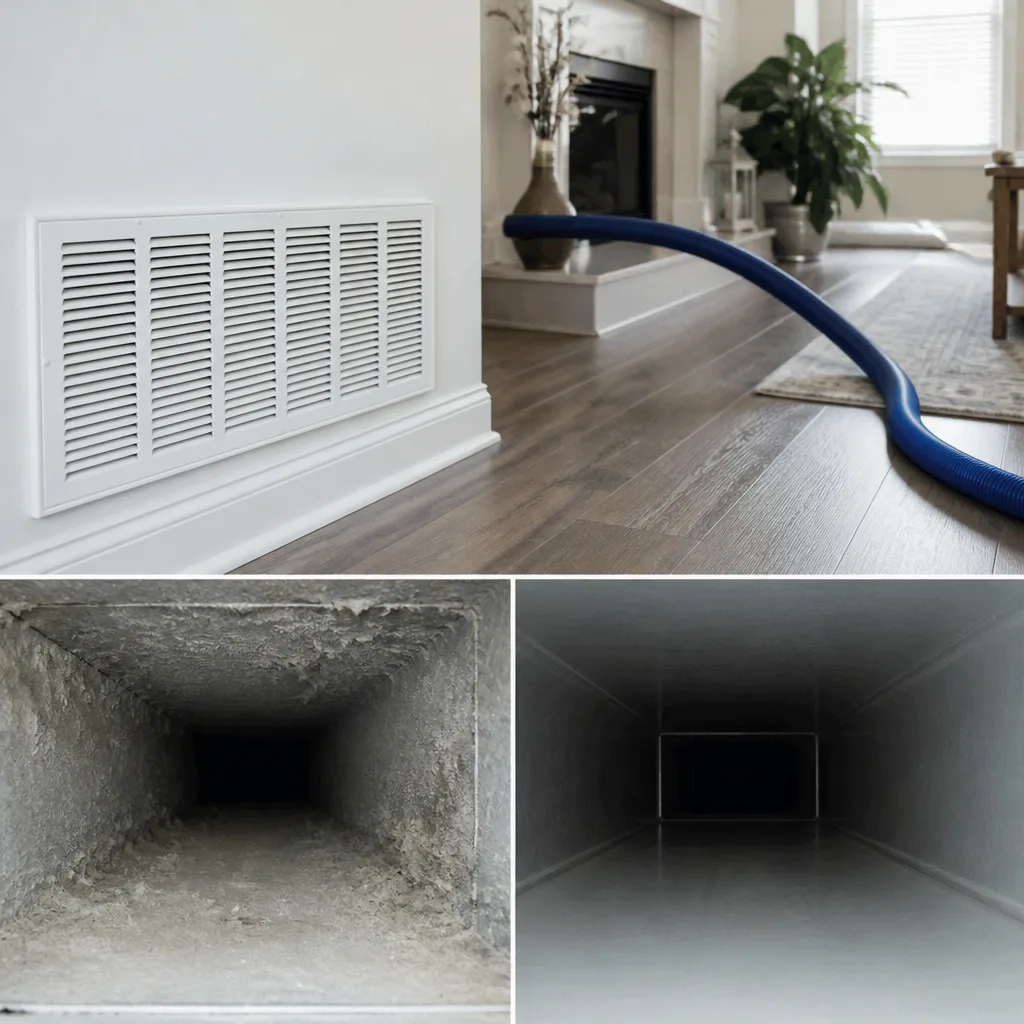 Whole-home duct cleaning
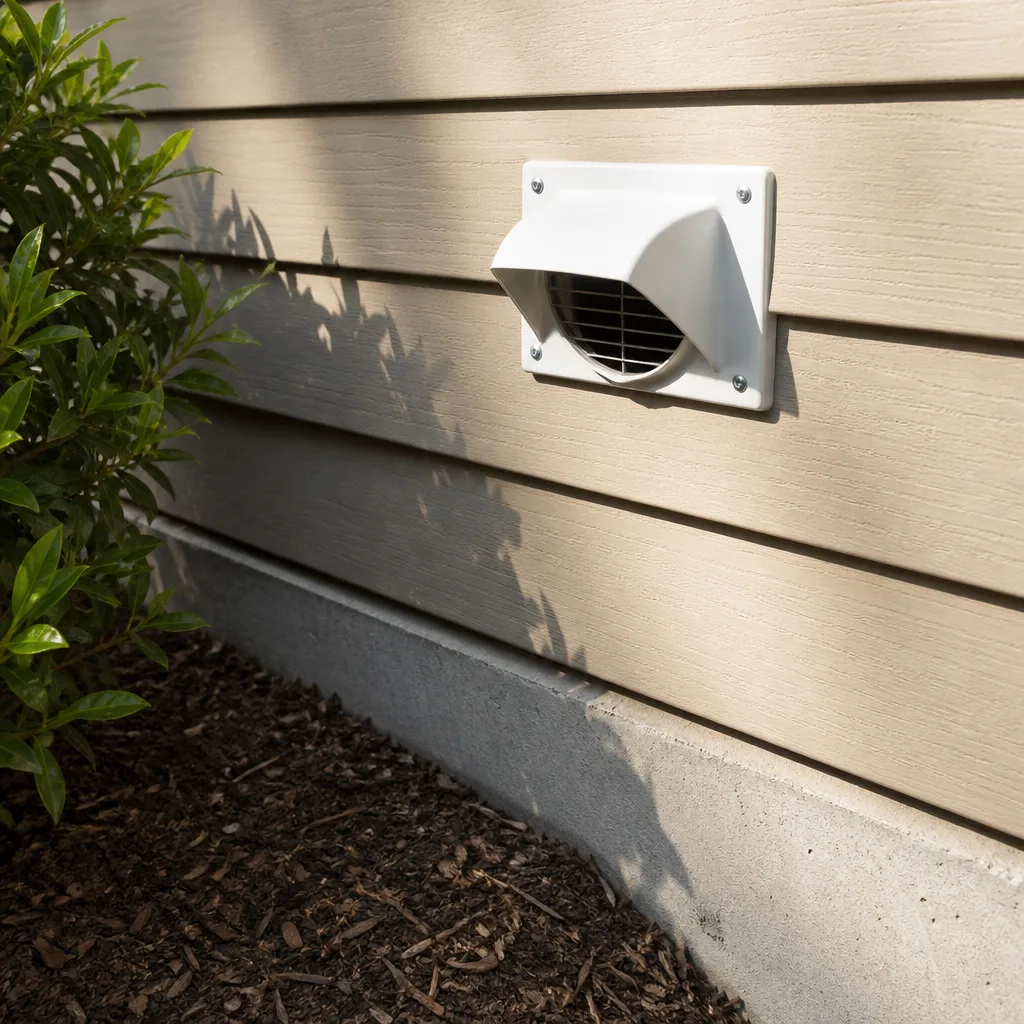 Dryer vent cleaning
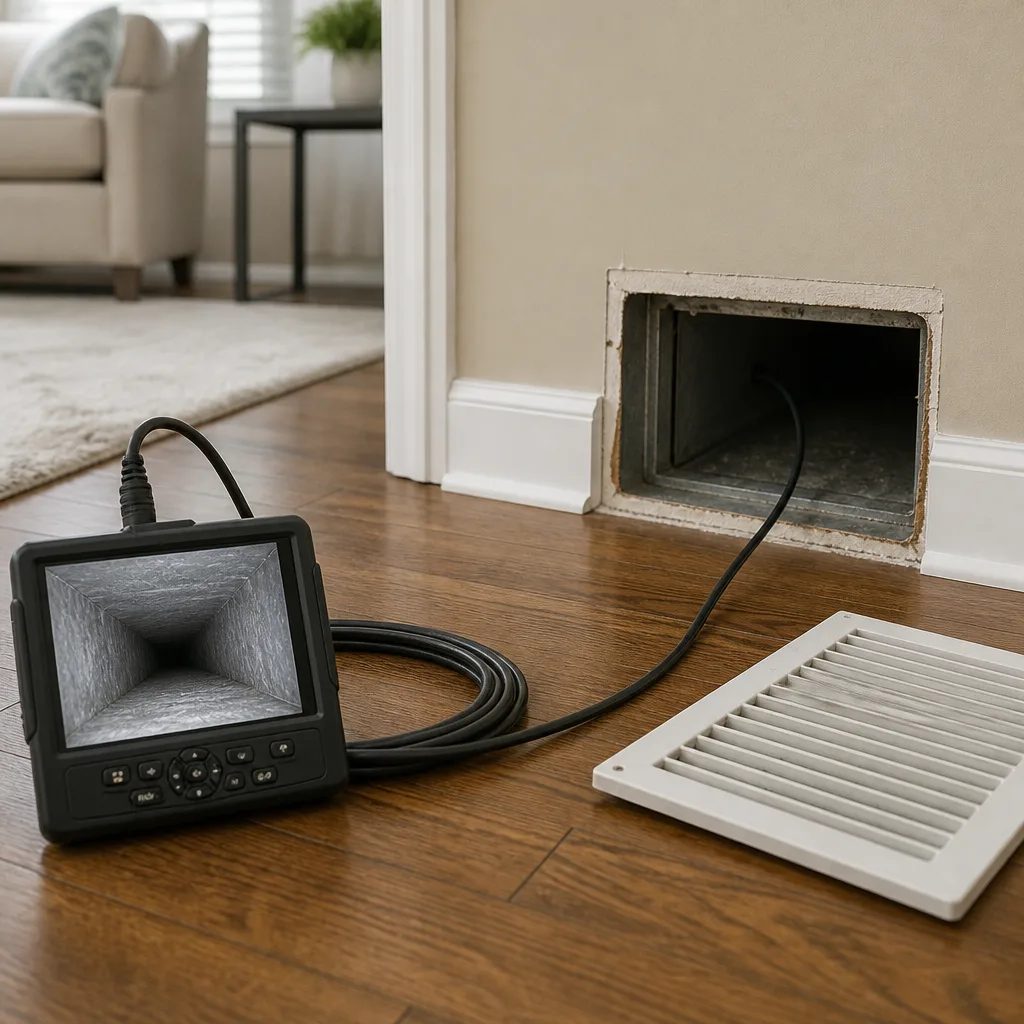 Camera inspection
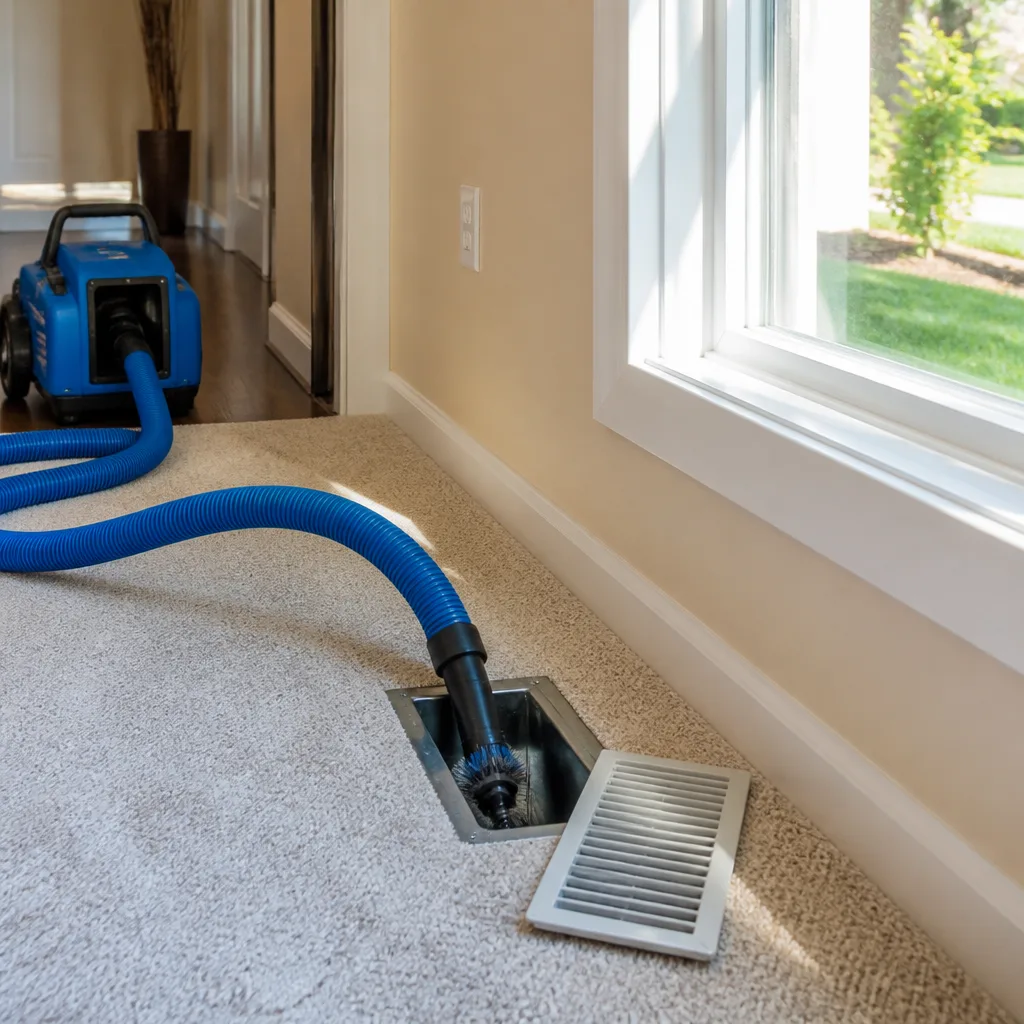 Sanitizing & deodorizing
Whole-system duct and dryer vent check with before-and-after photos - you see exactly what came out of your vents
That "$99 whole-house special" is a bait ad - the real number appears once they are in your hallway, or the "clean" is a shop-vac at the register. We photograph the inside of your ducts before and after instead.
How to Hire an Air Duct Cleaning Contractor in Las Vegas: A Step-by-Step Guide
A 2023 CBC Marketplace investigation sent hidden cameras into homes across North America and found something that should make every Las Vegas homeowner pause: 7 out of 10 duct cleaning companies tested left the ducts dirtier or no cleaner than before the job started. Most of the homeowners never knew, because they couldn’t see inside their own ductwork. That’s the uncomfortable reality of this trade: in a city where dust, pet dander, and construction debris blow through the valley year-round, the difference between a professional cleaning and a scam is invisible unless you know exactly what to ask before you sign anything. This guide gives you those questions, the Las Vegas-specific red flags, and a screening process that takes about ten minutes and saves you from handing money to someone with a shop vac and a rental truck.
Styles & brands we work with
Quick Answer
To hire an air duct cleaning contractor in Las Vegas, you need to verify four things before booking: the CFM rating of their vacuum system (professional units pull 2,000+ CFM using negative pressure, not a contact vacuum), their documentation process (you should receive before-and-after photos of the main trunk and register close-ups, not just a dirty filter shot), the exact scope in their written quote (every line item itemized and priced before work starts), and whether they carry NADCA certification or equivalent training, since Nevada has no duct-cleaning-specific license requirement. A reputable Las Vegas outfit will hand you a written price first, answer all four questions without hesitation, and stand behind the work for a full year.
Table of Contents
- The Nevada Licensing Reality: Why Duct Cleaning Is a Trust-Based Trade
- The Four Questions That Expose a Real Contractor vs. a Shop-Vac Operator
- How to Read a Duct Cleaning Quote in Las Vegas
- Las Vegas-Specific Red Flags That Should Make You Hang Up
- What Before-and-After Photos Should Actually Show
- Your Step-by-Step Hiring Process, Start to Finish
- Common Mistakes to Avoid
- When to Call a Professional
- Frequently Asked Questions
- The Bottom Line
The Nevada Licensing Reality: Why Duct Cleaning Is a Trust-Based Trade
Here’s what most Las Vegas homeowners don’t realize: Nevada has no license category specifically for air duct cleaning. None. The Nevada State Contractors Board issues a C-21 license for HVAC contracting, which covers installation, repair, and maintenance of heating and cooling systems. But the act of cleaning the ductwork itself? There is no board exam, no state inspection, no specific licensing requirement for it. Anyone with a truck, a portable vacuum, and a business card can legally clean air ducts in Las Vegas tomorrow morning.
This creates a trust asymmetry that many operators exploit. A company can advertise “licensed and insured” because they hold a general business license from the City of Las Vegas, which requires nothing more than a fee and a tax ID. Or they hold a C-21 HVAC license because they install air conditioners, but they’re doing duct cleaning as a side service with equipment that would make an actual cleaning technician cringe. The licensing shield looks real. It often isn’t.
So what’s the proxy standard? In the absence of Nevada-specific credentialing, the industry benchmark is NADCA, the National Air Duct Cleaners Association. NADCA certification means the company follows the ACR (Assessment, Cleaning, and Restoration) standard, uses negative-pressure equipment rated at a minimum CFM threshold, and trains technicians on proper containment and source-removal methodology. It’s not a government stamp, but it’s the closest thing to a quality gate this trade has. When you’re screening contractors in Las Vegas, ask directly: “Do you follow NADCA standards, and what negative-pressure equipment do you run?” A professional answers immediately with numbers. An amateur changes the subject to price.
We’ve seen what passes for duct cleaning in this valley. In Summerlin and Henderson, we regularly follow up behind companies that pulled a contact vacuum through the registers and called it a day. The homeowner paid $299 and got a visual smudge of dust removed from the first six inches of each vent. The trunk line, where the real accumulation lives, never got touched. That’s not cleaning. That’s dust rearrangement with a receipt.
The Four Questions That Expose a Real Contractor vs. a Shop-Vac Operator
You don’t need to be an HVAC technician to screen a duct cleaning company. You need to ask four questions. Each one targets a specific shortcut that amateurs take, and each one separates the professional-grade operators from the people who bought a brush kit from a wholesaler on Cheyenne Avenue. Here they are, in order of importance.
Question 1: “What’s the CFM rating of your vacuum system?”
CFM stands for cubic feet per minute, and it measures how much air a vacuum system moves. Professional duct cleaning relies on negative pressure: a massive vacuum creates suction at one point in the duct system while brushes agitate and loosen debris at another point. The loosened debris gets pulled toward the vacuum, not pushed back into your living room. This requires serious airflow. The NADCA standard for residential duct cleaning assumes a minimum of 2,000 CFM of airflow at the point of extraction. Portable systems like the truck-mounted units from Nikro that professionals run in Las Vegas hit this number easily. A shop vac from Home Depot pulls maybe 150 to 200 CFM. That’s an order of magnitude too weak to pull debris from a 25-foot trunk line.
Ask the question. The answer you want is a specific number: “We run 4,200 CFM negative-pressure units” or “Our truck-mounted system pulls 5,000 CFM.” The answer you don’t want is a blank stare followed by “Well, our equipment is industrial-grade.” Industrial-grade is a marketing word, not a specification.
Question 2: “Do you use contact vacuuming or negative-pressure extraction?”
These are the two fundamental methods in this trade, and they produce dramatically different results. Contact vacuuming means a vacuum hose touches the inside of the duct directly, sucking debris from wherever the hose can reach. The problem: a duct system in a typical Las Vegas home has 30 to 60 feet of trunk line plus branch runs to every room. A contact vacuum can reach the first few feet of each register. The rest of the system stays dirty. Negative-pressure extraction, by contrast, seals the system, creates suction at a single access point on the main trunk, and uses agitation tools to loosen debris throughout the entire duct network. The debris is pulled to the vacuum through the airflow itself. That’s how a system actually gets clean, not just the six inches you can see.
If the contractor hesitates on this question, they’re running a contact rig. If they say “We do both depending on the job,” ask when they’d choose contact vacuuming. There’s a legitimate answer (short dryer vent runs, small isolated sections), but there’s a wrong answer too (whole-house cleaning).
Question 3: “What documentation will I receive before and after?”
This question catches more amateurs than any other. A professional duct cleaning company documents the work because documentation is the only way for a homeowner to verify what happened inside walls they cannot see. The standard you want: before-and-after photos of the main trunk line taken through access points cut into the ductwork, close-up photos of multiple supply registers, and ideally a brief video walkthrough of the trunk. What you don’t want: a photo of a dirty air filter next to a clean one and a verbal assurance that “we did the whole system.”
We run Rotobrush rotary brush systems and Abatement Technologies containment units specifically because this equipment allows for precise, documented cleaning of the entire system, not just the outlet covers. When we’re done, our customers see the inside of their trunk line before and after, with the access points clearly visible. That’s the Relay Standard, and it’s non-negotiable: air duct cleaning in Las Vegas means you see the work, not just trust that it happened.
Question 4: “Will you give me a written scope of work with line-item pricing before you start?”
This is the question that makes bait-and-switch operators disappear. A legitimate quote lists exactly what’s included: the number of supply registers, the return-side cleaning, the main trunk, the air handler interior, the plenum boxes if applicable. Each line item has a price next to it, and the total is what you pay. No “we’ll see what we find once we get in there” unless there’s a clear add-on price structure already in writing. No per-vent discovery pricing where the quoted number assumes six vents but your house has ten and suddenly the price doubles.
In Las Vegas, this matters more than in most markets because the $99 whole-house banner ads are everywhere. They quote a price that assumes a two-bedroom apartment’s worth of ductwork, then hit you with a four-figure invoice once the technician is inside and has “discovered” that your system needs bio-cleaning, sanitizer, UV lights, and a high-efficiency filter upgrade. A written scope of work with line-item pricing is your firewall against that. If a company won’t provide one before the job starts, walk away.
How to Read a Duct Cleaning Quote in Las Vegas
Once you’ve asked the four questions and narrowed your list to two or three contractors, you’ll get written quotes. Here’s how to parse them. Most standard air duct cleanings in Las Vegas run $350 to $650 for a typical single-family home, depending on system size, number of registers, and accessibility. Below that range, you’re either getting a partial job or a teaser price that will grow on-site. Above that range, ask what’s driving the premium: sometimes it’s legitimate (an older home with asbestos-wrapped ducts requiring containment, a system with severe contamination, a multi-story home with hard-to-reach trunk lines). Sometimes it’s padding.
A proper quote should always include these line items:
- Supply-side cleaning: every supply register and the branch runs connecting them to the trunk.
- Return-side cleaning: return registers, return drops, and the return plenum.
- Main trunk cleaning: the large rectangular or round ducts that distribute air from the air handler.
- Air handler / plenum cleaning: the interior of the blower cabinet and the plenum boxes where dust, hair, and construction debris accumulate.
- Access points and sealing: cutting access into the trunk for cleaning tools and camera documentation, then sealing those access points with proper metal patches and tape (not duct tape).
- Debris containment and disposal: how the extracted material is handled and removed from your home.
Legitimate add-ons, priced transparently and never pushed as scare tactics:
- Sanitizing fog or antimicrobial treatment: useful if there’s confirmed mold or bacterial growth, not useful as a default upsell on every job. A legitimate company will only recommend this after showing you the evidence.
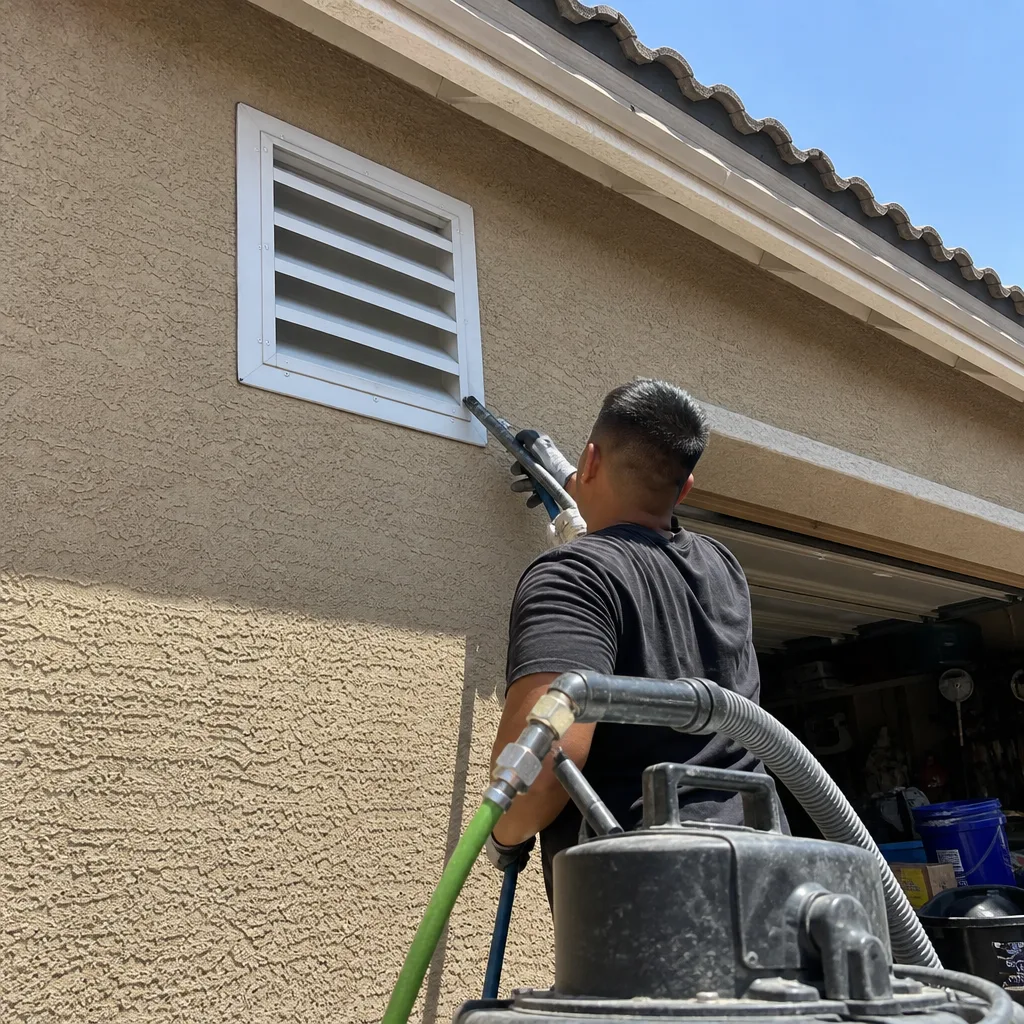
- Dryer vent cleaning: often bundled at a discount and genuinely valuable in Las Vegas, where lint buildup meets 110-degree heat and creates a real fire risk. We offer this as a standalone service too: dryer vent cleaning in Las Vegas.
- HVAC system cleaning: cleaning the coils, blower motor, and drain pan inside the air handler. In Las Vegas, where the AC runs six months of the year and dust coats evaporator coils constantly, this is a legitimate performance improvement. HVAC cleaning in Las Vegas is a core service we provide, and we recommend it alongside duct cleaning for anyone whose system hasn’t been opened up in years.
Padding you should question:
- Ozone treatments marketed as “air purification” during a cleaning. Ozone is a lung irritant, and the EPA does not recommend ozone generators for occupied residential spaces.
- UV light installations sold as a standard part of duct cleaning. UV systems have legitimate uses on the coil side of an air handler, but they’re a $700 to $1,200 add-on that has nothing to do with whether your ducts are clean.
- “Mold removal” quoted without any testing or visible evidence. If a technician points a flashlight down a duct, sees dust, and says “that’s mold,” ask them to test it. Dust looks like dust. Mold testing kits exist for a reason.
Las Vegas-Specific Red Flags That Should Make You Hang Up
Every market has its scams, and Las Vegas has perfected the art of the duct cleaning bait-and-switch. Here are the red flags we warn our customers about, the ones we see most often in this valley.
The $99 whole-house special on a billboard. You’ve seen them on I-15 and the 215. A $99 duct cleaning sounds like a great deal until you read the fine print or, more often, until there is no fine print and the technician simply announces that your system “needs” $300 of sanitizing and $400 of “hard-to-reach duct” add-ons. These operations run on volume and upsells. They lose money on every $99 job and make it back with scare-tactic extras. In our experience, a legitimate whole-house cleaning in Las Vegas cannot be done for $99. The equipment, the labor, the drive time, the insurance, the documentation process: the math doesn’t work without a catch.
The technician who arrives with a portable unit and no negative-pressure setup. If the equipment can be carried in one hand, it cannot pull the airflow needed to clean a trunk line. Portable HEPA vacuums exist and have a role in the industry, but a real system cleaning uses a truck-mounted or large portable negative-pressure unit pulling 2,000+ CFM. If the setup fits in a bin behind the passenger seat of a sedan, your ducts are getting a light dusting, not a cleaning.
The quote that changes after the technician sees your system. This is the core move in the Las Vegas duct cleaning scam playbook. The phone quote is cheap. The technician arrives, pops open a register, shows you a decade of dust and pet hair, and tells you the price just went up because “this is worse than we thought.” A professional company knows that a ten-year-old system in Las Vegas is going to be dirty. That’s why they’re coming out. The written quote you receive should hold for the work described. If a legitimate problem emerges that genuinely requires additional work, it should be communicated with evidence and priced as a clear addition, never as a pressure tactic.
The company with no Las Vegas address. A surprising number of duct cleaning operations in this city run from out of state, sending subcontractors or “local crews” that change from month to month. If you can’t verify a physical presence in Las Vegas, or if the company’s phone number routes to a call center that can’t answer basic questions about the local market, you’re probably dealing with a lead-generation front. You want a company whose technicians live and work in the valley.
The “we’re already in your neighborhood” cold call or door-knocker. This one’s older than the Strip itself and still works because it feels convenient. A random crew shows up offering a discount because “we’re doing a job down the street.” Legitimate local companies with good reputations don’t need to cold-knock. We get our work from word of mouth and repeat customers, not from ringing doorbells in Summerlin and hoping someone’s desperate enough to say yes.
What Before-and-After Photos Should Actually Show
Documentation is the only way to verify work that happens inside your walls, and the quality of the documentation tells you a lot about the quality of the cleaning. Here’s what you should actually receive from a professional duct cleaning company in Las Vegas.
Access panel shots. A real cleaning requires cutting access points into the main trunk line so the rotary brushes and cameras can get inside. Photos should show these access points cut, the interior of the trunk through the opening, and the access point sealed afterward. If a company’s entire photo package is register-level shots, they never opened the trunk, which means they never actually cleaned the part of the system where debris accumulates.
Register close-ups before and after. Each supply register should be documented individually or, at minimum, a representative sample from each zone of the house. Before photos show dust, hair, and debris buildup. After photos show bare metal. This is basic documentation that any professional crew provides without being asked.
Main trunk before and after. This is the money shot. The main trunk is the large central duct that runs the length of your home, and it’s where years of dust, construction debris, pet hair, and biological contamination accumulate. A before photo of a dirty trunk looks like a carpeted surface made of dust. An after photo should look like clean sheet metal. If you only see one photo and it’s a filter, the company didn’t document the actual cleaning.
The air handler interior. In Las Vegas, your air handler lives in the garage or attic and serves as the heart of the system. Dust accumulates on the blower motor, the evaporator coil, and the interior cabinet. A professional cleaning photographs this area before and after too, because cleaning the ducts without cleaning the air handler means the system redistributes contamination immediately.
This is where the Relay Home Co. standard comes in: every Cardinal Air Duct Las Vegas job includes before-and-after photo documentation of the trunk line, the registers, and the air handler, all delivered digitally so you can see exactly what was done. We run Abatement Technologies containment units specifically so that the dust we extract doesn’t recirculate into your living room while we work. The photos are the proof, but the containment is the thing that makes the proof meaningful.
Your Step-by-Step Hiring Process, Start to Finish
Here’s the entire process, from first search to final invoice, laid out in the order we recommend for Las Vegas homeowners.
- Search locally and collect three companies. Look for companies that actually operate in Las Vegas, with local addresses, local phone numbers, and reviews from local customers. Skip the national lead-gen sites that promise “top-rated duct cleaning near you” and sell your information to the highest bidder.
- Call each company and ask the four screening questions. CFM rating, contact vs. negative pressure, documentation process, written scope with line-item pricing. Fifteen minutes on the phone, three calls, and you’ve eliminated the amateurs.
- Request written quotes from the survivors. A real quote is itemized, specific, and sent before the technician arrives. It includes the number of registers, the scope areas, and the total price. If a company won’t put it in writing, thank them and move on.
- Check NADCA membership or equivalent training. Not required by Nevada law, but a strong indicator of professionalism. Ask for proof of training or certification. A company that invests in training invests in its work.
- Verify insurance and worker’s comp. This one matters. If an uninsured contractor damages your ductwork or gets injured in your attic, you’re on the hook. Ask for a certificate of insurance. A professional company sends it over without resistance.
- Book the job and confirm the documentation. Before the technician starts, confirm that you’ll receive before-and-after photos of the trunk line and registers, plus a written summary of what was done. This is your verification.
- Review the work and the photos. After the job, look at the photos. Look at the sealed access points. If anything feels off, ask questions. A reputable company answers them.
If you want to see what this process looks like when it’s streamlined, Cardinal Air Duct Las Vegas home service is built around total visibility: a live arrival window you can track, photos of the work, a written price before anything starts, and a digital invoice you can pay from your phone. That’s the Relay Standard, and it’s what we think every contractor in this town should be doing.
Common Mistakes to Avoid
- Hiring solely on price. In Las Vegas, the cheapest quote is almost always the most expensive job in the end. The $99 special becomes $800 with upsells. Get the written quote, then compare scope, not just the number at the bottom.
- Skipping the insurance check. Duct cleaning involves cutting access holes in your ductwork and running power tools in your attic. If the contractor isn’t insured and something goes wrong, your homeowner’s insurance becomes the payer of last resort.
- Accepting a quote over the phone without a written breakdown. “We’ll take care of everything for $299” is not a quote. It’s a guess. Get the line items, the scope, and the total in writing before you commit.
- Ignoring the dryer vent. In Las Vegas, lint clogged dryer vents are a leading cause of house fires, and the dry desert air makes lint extra combustible. If you’re already having ducts cleaned, dryer vent cleaning in Las Vegas is the highest-value add-on you can book at the same time.
- Believing that ducts only need cleaning if you can see dust. Dust accumulates inside the system long before it’s visible on your registers. By the time you see it on the vent covers, the buildup inside the trunk is severe. Las Vegas homes need cleaning every three to five years, more often with pets or recent renovation work.
- Falling for the “We’ll clean one vent free” doorstep offer. This is the gateway to high-pressure sales. No legitimate company in Vegas cleans a single vent as a promotional stunt. The free vent is never free.
- Not asking how long the job will take. A proper whole-house cleaning in Las Vegas takes three to five hours. A company that books two-hour windows for a full system cleaning is either skipping steps or planning an upsell marathon. If the schedule seems too fast, the work probably is too.
When to Call a Professional
There are times when duct cleaning is a maintenance task and times when it’s a necessity. If you’ve lived in your Las Vegas home for five or more years without a cleaning, the ducts are overdue regardless of what you can see. If you’ve done any renovation work (drywall, flooring, paint), construction dust has been pulled through the system and it’s coating everything inside. If you have pets, animal hair and dander accumulate in the trunk line faster than most people realize. If anyone in the home has respiratory issues, allergies, or unexplained sinus problems that get worse at night, dirty ducts are a common culprit. And if you’ve never seen the inside of your ducts, you don’t know what’s in there. Cardinal Air Duct Las Vegas offers free estimates in Las Vegas, and we’ll give you a written price before any work starts. Call (725) 600-6597 to schedule yours.
Frequently Asked Questions
A standard whole-house air duct cleaning in Las Vegas typically runs $350 to $650 for a single-family home, depending on system size, number of registers, and accessibility. Prices below that range usually signal a teaser quote that will grow on-site, and prices above it should come with a clear explanation. Call (725) 600-6597 for an exact quote on your specific system, free of charge.
Cheap quotes in Las Vegas usually come from companies running portable contact vacuums instead of negative-pressure systems, skipping the trunk line entirely, and relying on in-home upsells to make their margin. A $99 job cannot cover the cost of proper equipment, trained labor, insurance, and documentation. The price difference reflects the scope of work, not a discount on the same service.
You should receive before-and-after photos of the main trunk line, the individual supply registers, and the air handler interior, all taken through access points that the technician cuts and seals during the job. If the only photo you get is a dirty filter, the company didn’t document the actual cleaning. Ask for the photos before you book, and hold the company to it.
Every three to five years is the general recommendation for Las Vegas homes, but the desert climate and constant AC use can shorten that window. Homes with pets, smokers, recent renovation work, or family members with allergies should consider cleaning every two to three years. The dust in this valley is relentless, and it accumulates in ductwork faster than in most climates. Call (725) 600-6597 and we’ll help you assess whether your system is due.
Nevada has no license category specifically for air duct cleaning. The C-21 HVAC license covers heating and cooling system work, but the act of cleaning ducts is not separately regulated by the Nevada State Contractors Board. That’s why NADCA certification and a company’s willingness to answer equipment and process questions are the best screening tools available.
Air duct cleaning addresses the distribution system: supply ducts, return ducts, trunk lines, and registers. HVAC cleaning addresses the equipment itself: the air handler, blower motor, evaporator coil, and drain pan inside the unit. In Las Vegas, where AC systems run nearly year-round, the coil and blower accumulate dust and grime that reduces efficiency. We recommend doing both together, and HVAC cleaning in Las Vegas is a core part of our service offering.
The Bottom Line
Hiring an air duct cleaning contractor in Las Vegas comes down to four questions: CFM rating, vacuum method, documentation, and written scope. The companies that answer all four confidently and specifically are the professionals. The ones that deflect, price-drop, or promise $99 whole-house specials are running a different business model entirely. In a market with no trade-specific licensing, your questions are your protection. Get the written quote, verify the insurance, demand the before-and-after photos, and you’ll be in the small minority of Las Vegas homeowners who actually got what they paid for. The rest of this valley is still operating on trust, and trust is exactly what the bad actors are counting on.
Written by Omar Haddad, Owner at Cardinal Air Duct Las Vegas, serving Las Vegas since 2005.
See the difference
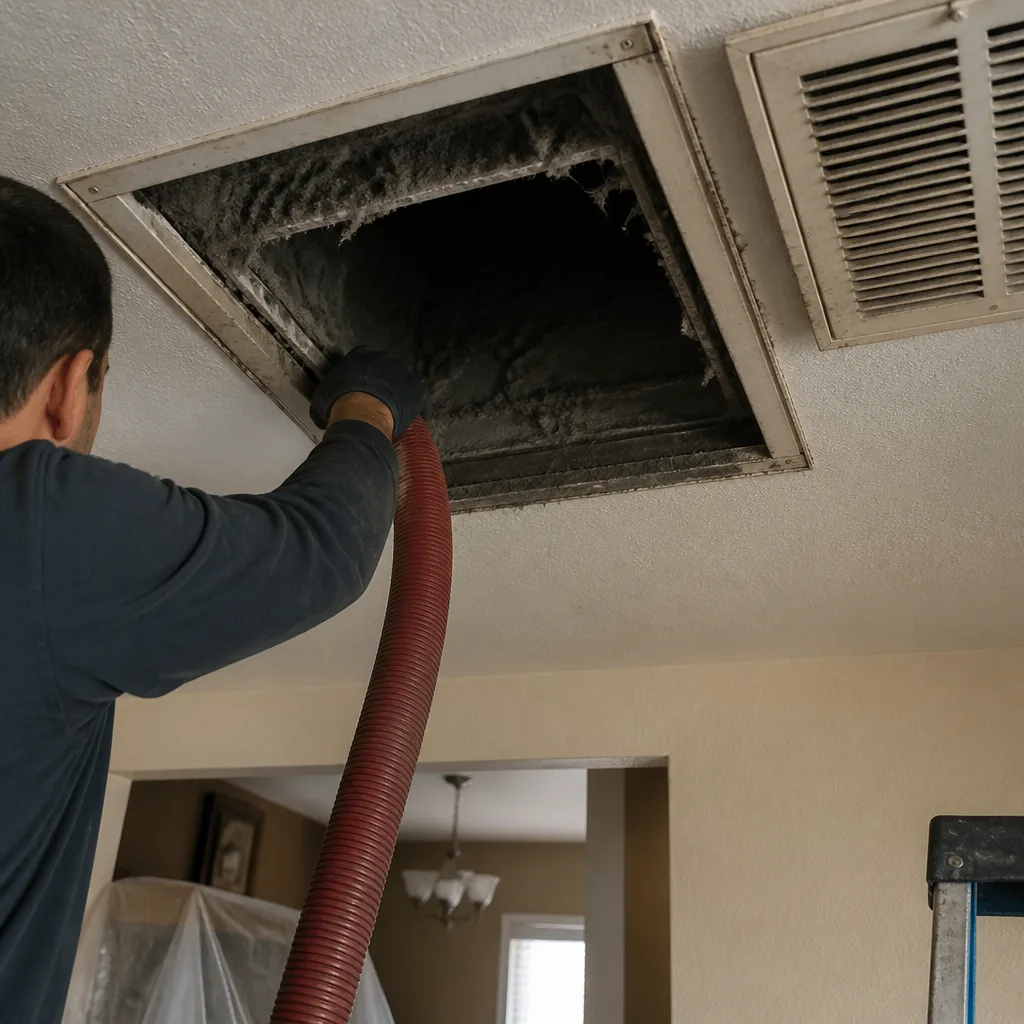 Before
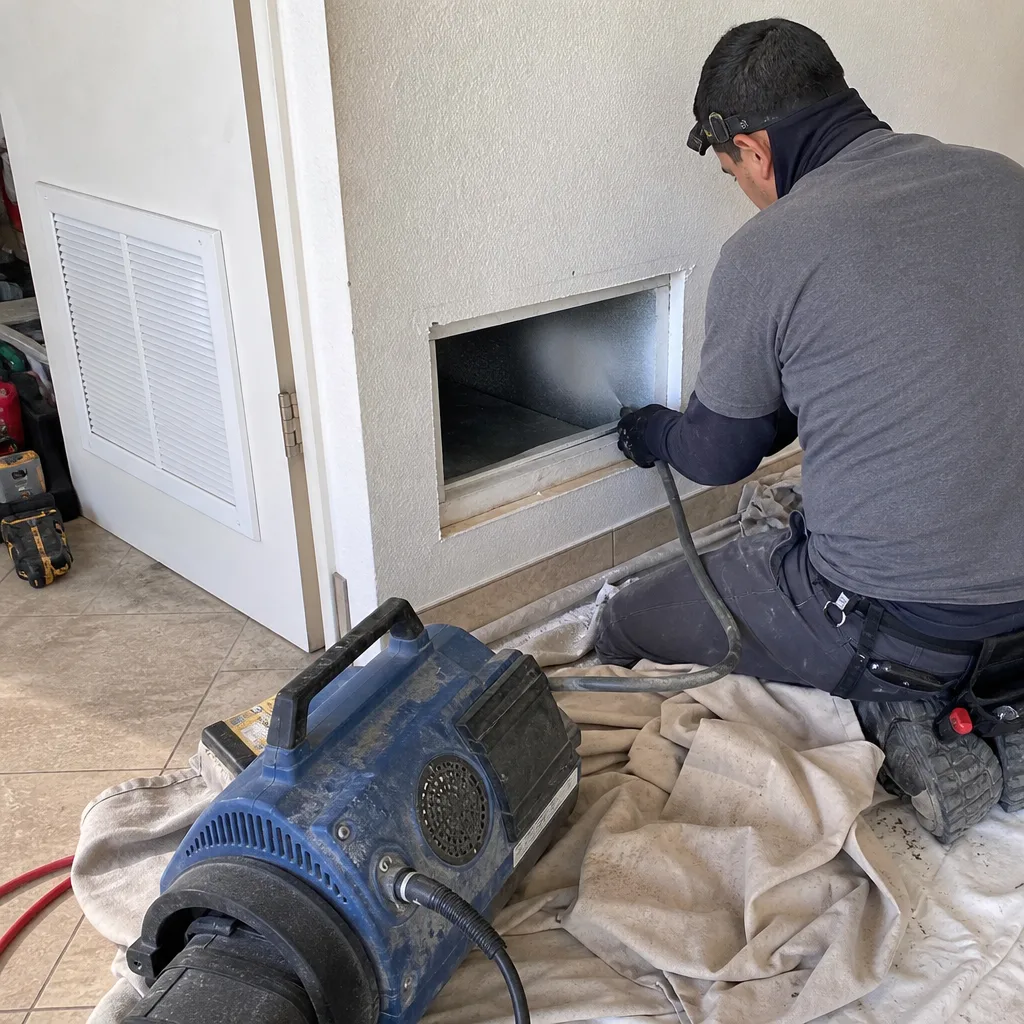 After
After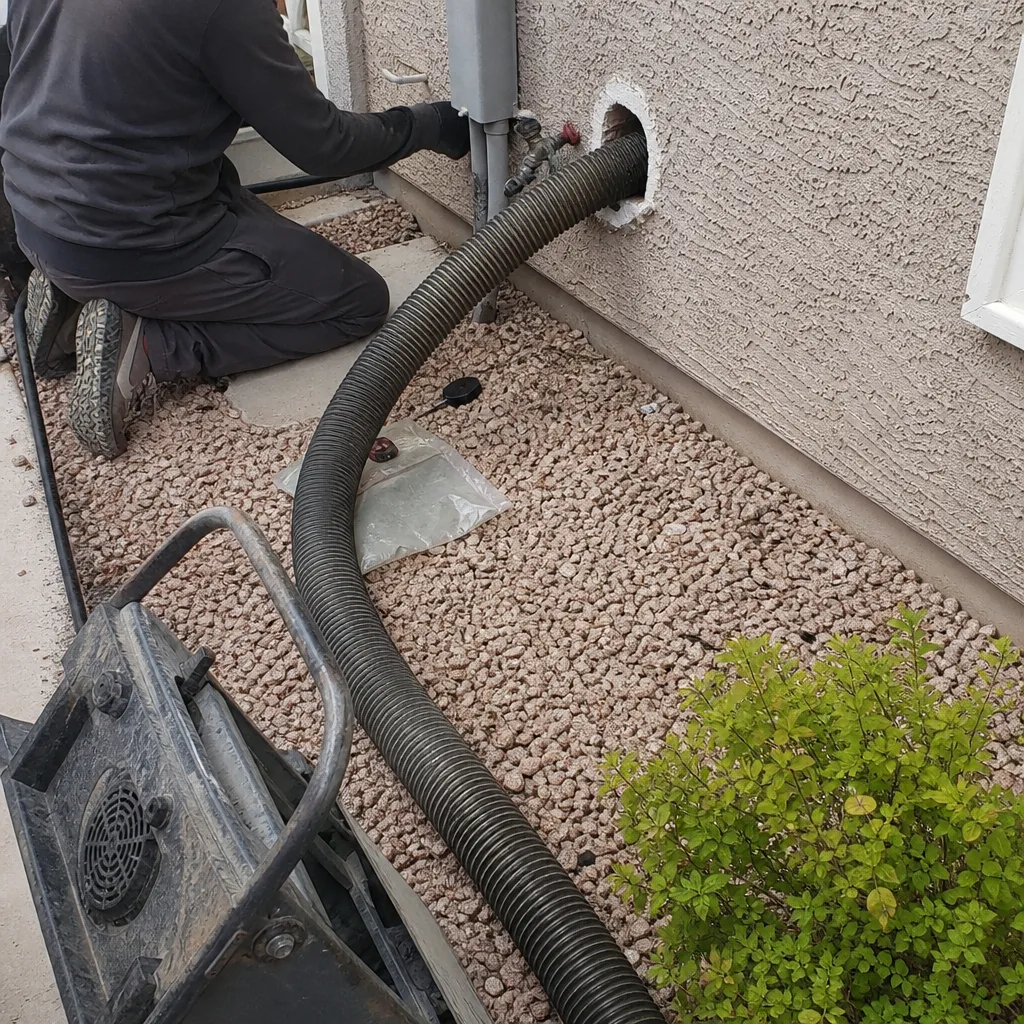 Before
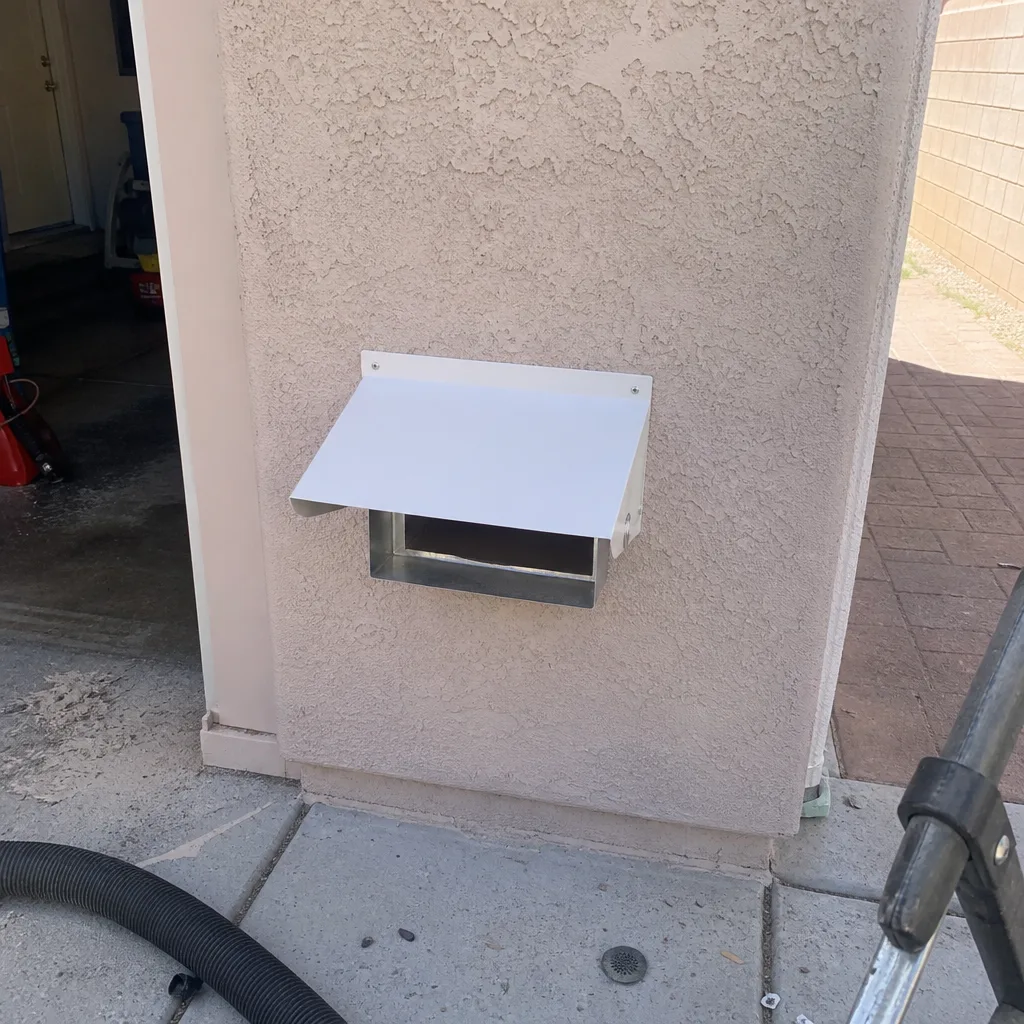 After
After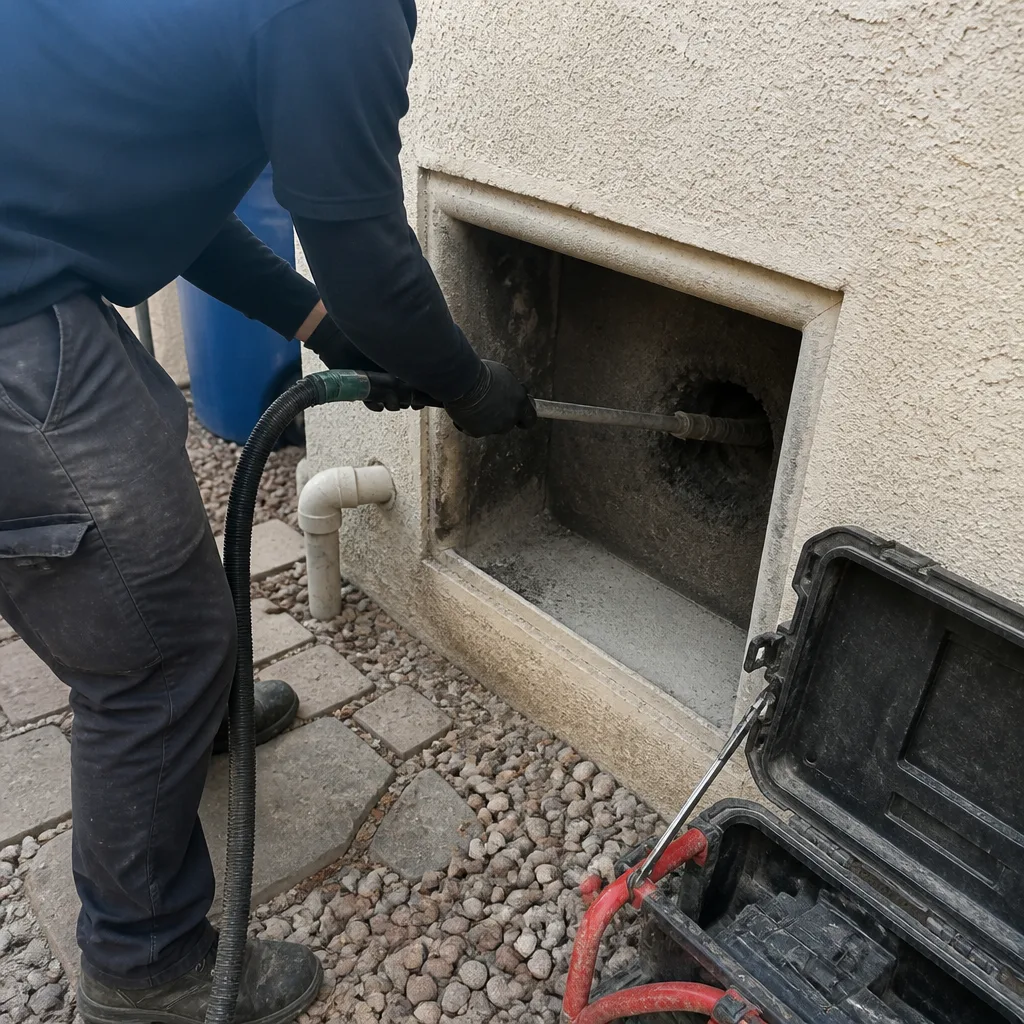 Before
 After
After