
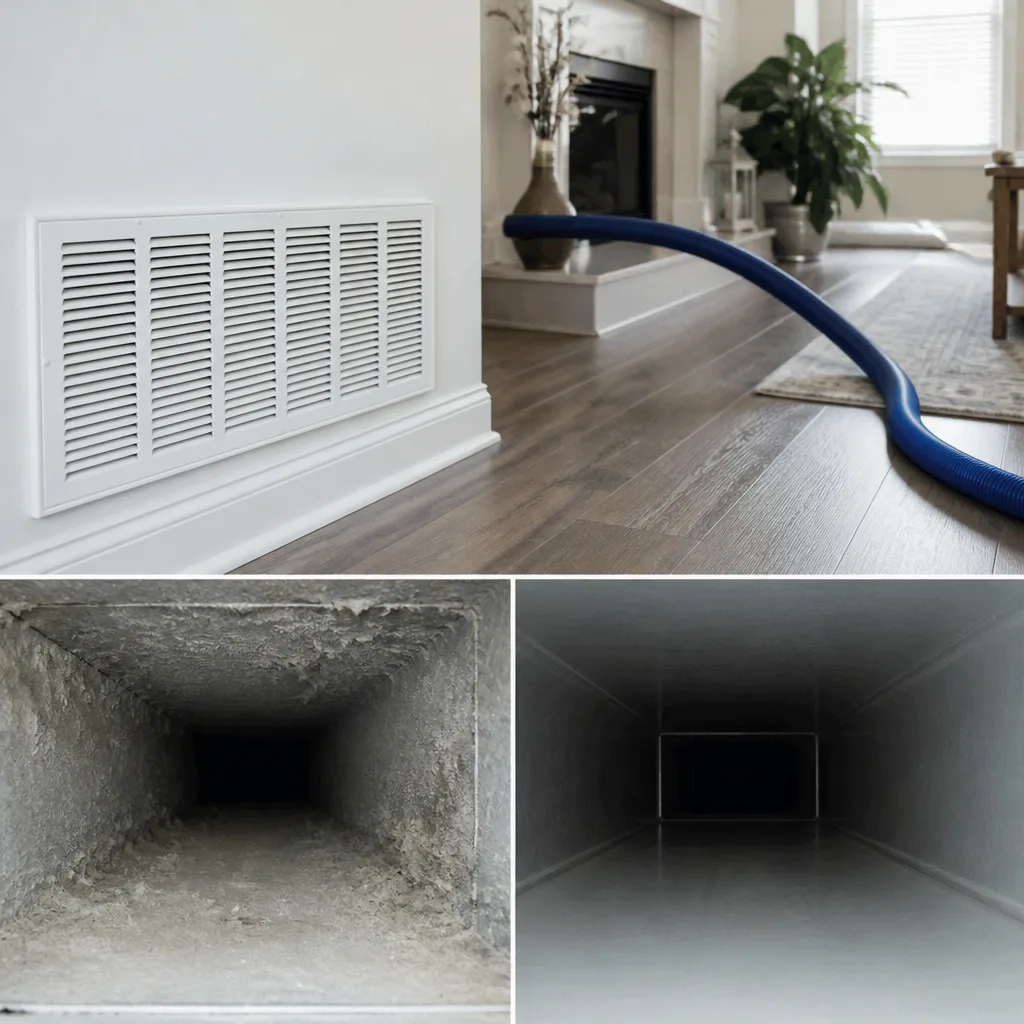
 Whole-home duct cleaning
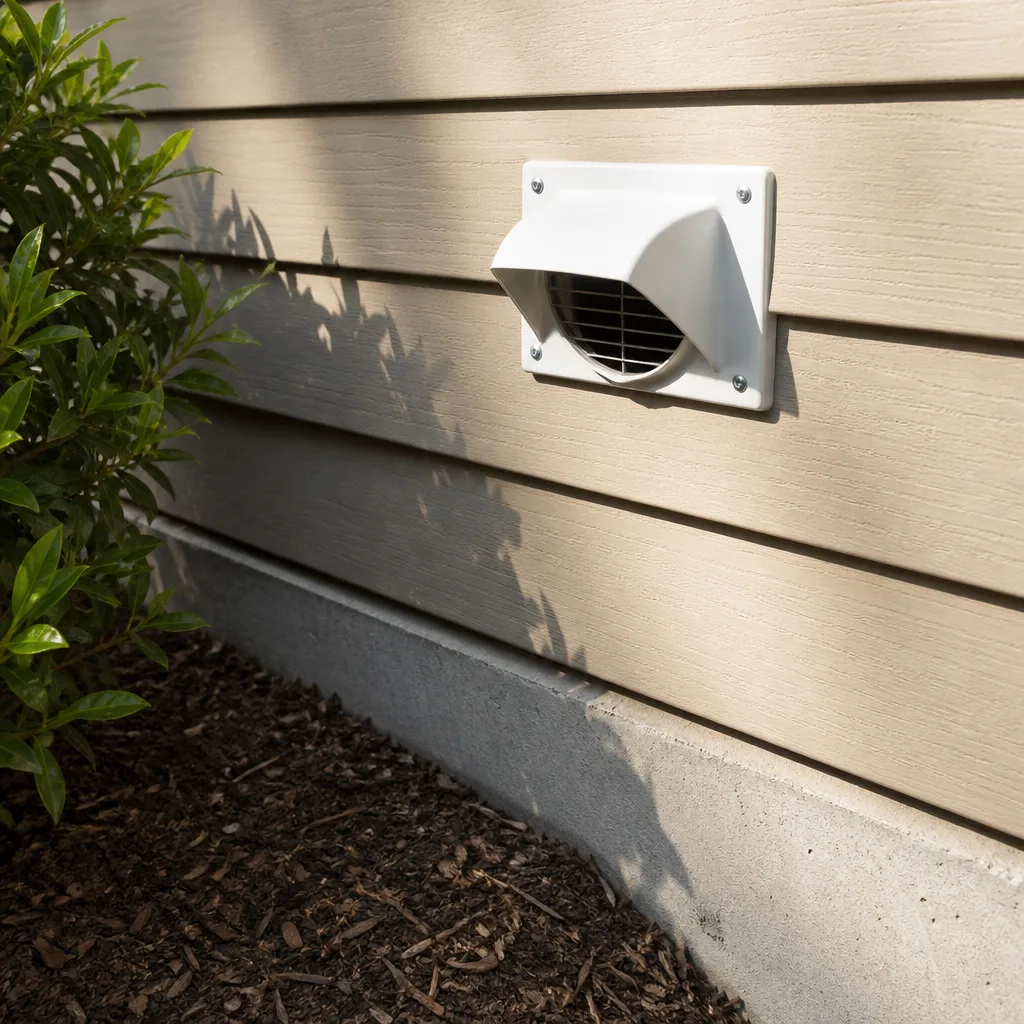 Dryer vent cleaning
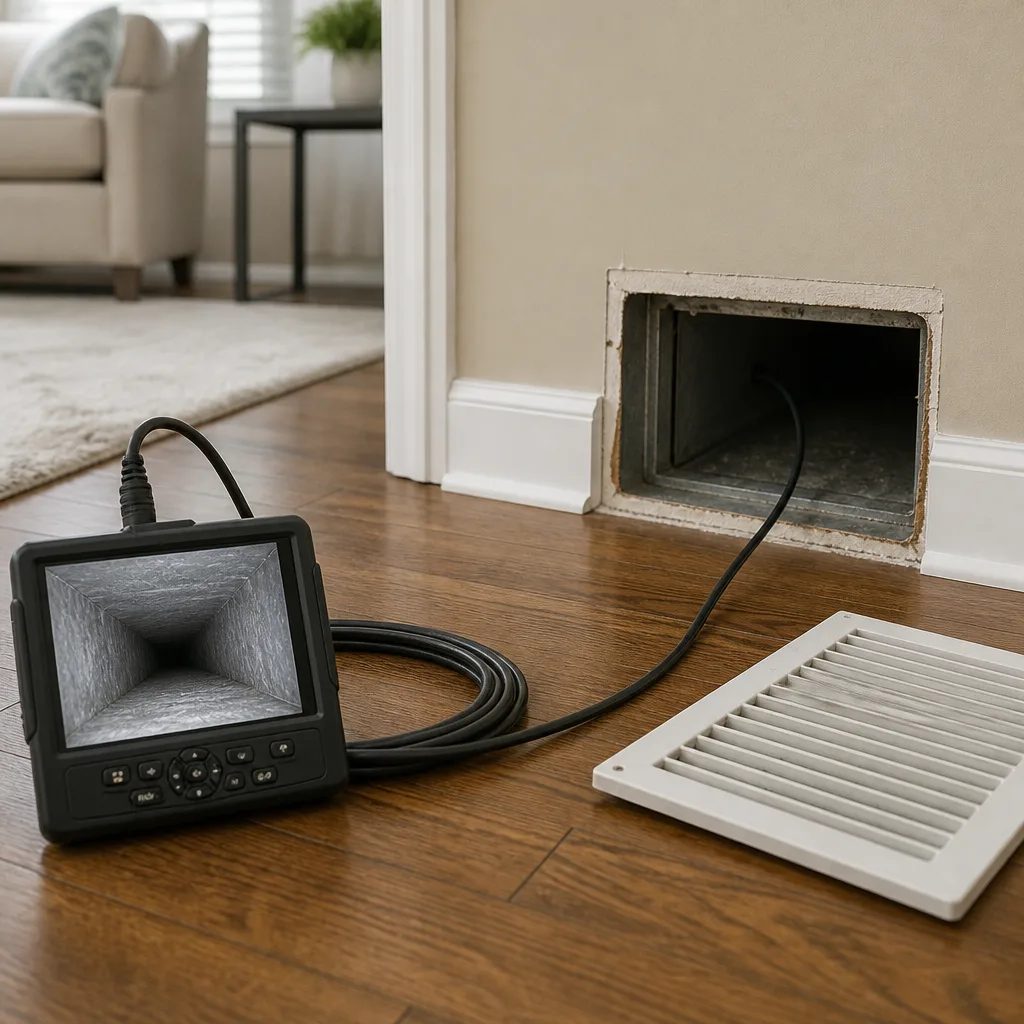 Camera inspection
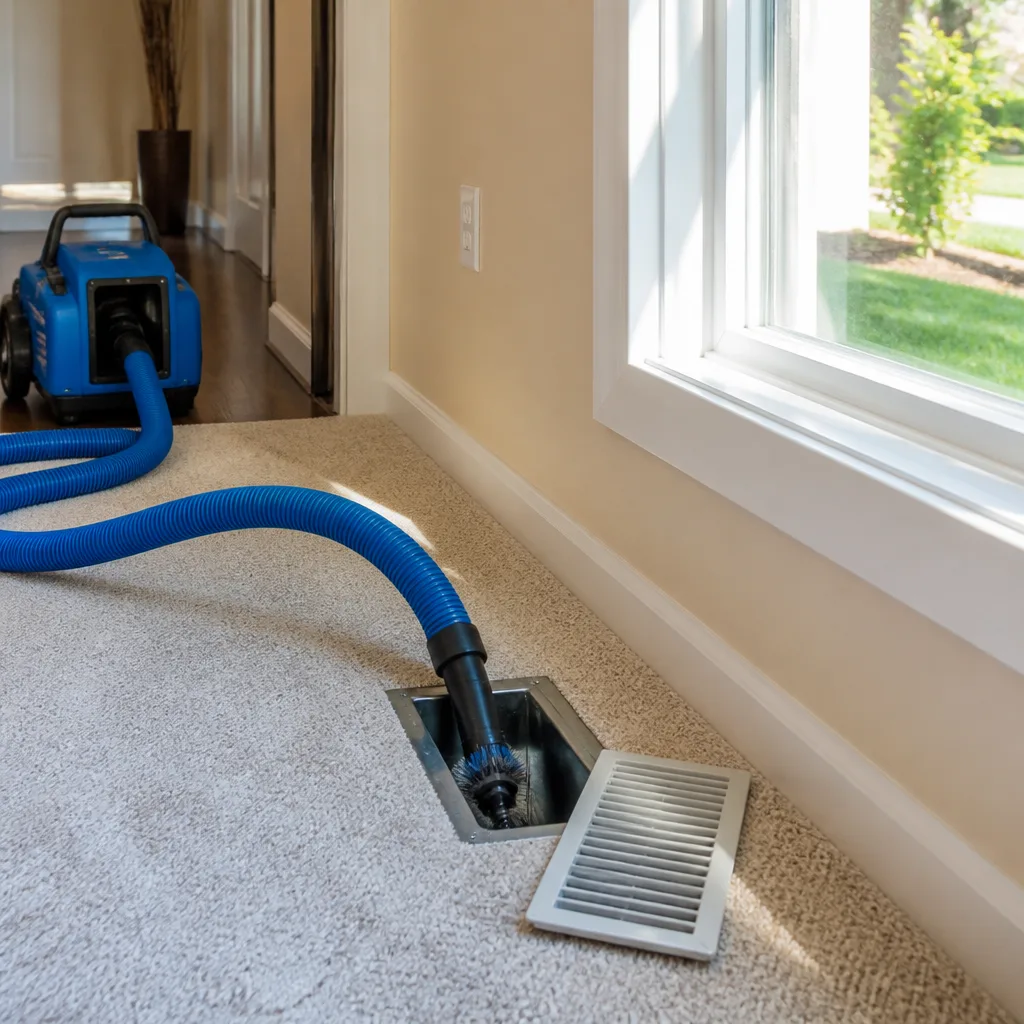 Sanitizing & deodorizing
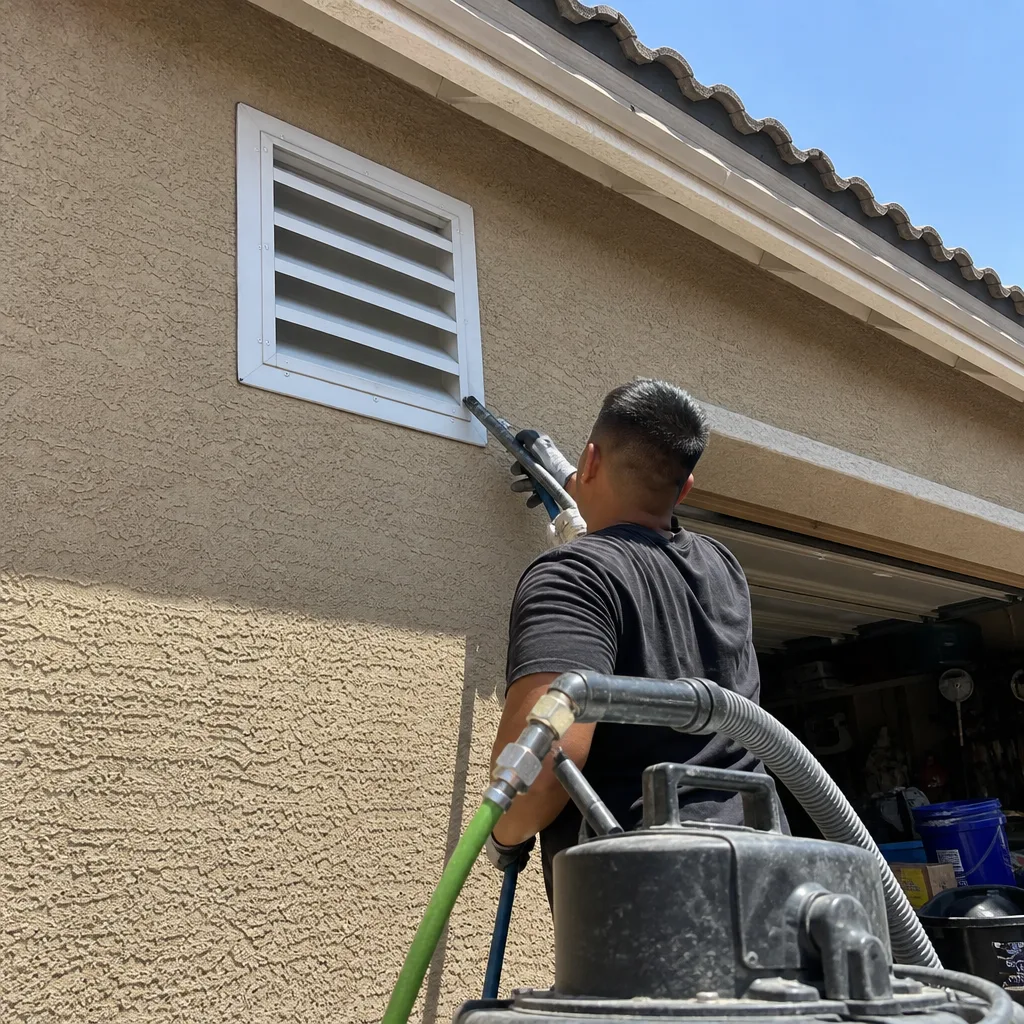
Whole-system duct and dryer vent check with before-and-after photos - you see exactly what came out of your vents
That "$99 whole-house special" is a bait ad - the real number appears once they are in your hallway, or the "clean" is a shop-vac at the register. We photograph the inside of your ducts before and after instead.
Honeywell Register & Grille Cleaning: The Las Vegas Owner’s Guide
We clean and restore Honeywell registers and grilles throughout Las Vegas for a flat installed price of $45 – $95 per register, including removal, degreasing, washing, drying, and reinstallation. Most homes with 8 – 12 registers fall between $360 and $1,140 total, and we quote the full job before we touch anything. If you’ve noticed a gray film on your registers, a musty smell when the AC kicks on, or dust streaks on the ceiling around your vents, the registers and grilles are almost certainly overdue for a proper cleaning rather than a quick wipe-down.
Here’s the thing most Las Vegas homeowners don’t realize: your Honeywell registers are doing more than directing airflow. They’re the last surface air passes over before it enters your lungs. In a city where the AC runs nine months a year, the buildup on those registers isn’t cosmetic, it’s particle matter being redistributed into every room. Omar Haddad and our crew see this daily in homes from Summerlin to Henderson, and the fix is straightforward when you use the right approach.
Which Honeywell Models This Applies To
We service the full Honeywell residential register and grille lineup, including the HC-Series (HC26, HC28, HC30 sidewall and ceiling registers), the L-Series linear bar grilles, and the FL-Series floor registers commonly spec’d in Las Vegas slab-foundation homes. Honeywell’s current homeowner-grade registers use a stamped aluminum face with a powder-coated finish, and the powder coating is actually part of what fails in the Nevada climate. The coating on older Honeywell units was applied thinner than on their commercial line, so after five or six years of dry desert air and constant thermal cycling, it begins to chalk and flake at the louver edges.
To identify what you have, pop the register out and look at the back side. Honeywell stamps the model number into the aluminum frame on most HC and FL units from 2015 onward. If the stamp is gone or the register is older, measure the face plate dimensions, not the duct opening. That measurement tells us whether you have a 4×10, 4×12, 6×10, or 6×12 register. One Las Vegas gotcha: homes built in the 1990s and early 2000s around Spring Valley and Centennial Hills often have non-standard 3.25×11 ceiling openings, and those take a specific Honeywell HC24 narrow register that most big-box stores don’t stock. We carry them on the truck.
For OEM versus aftermarket: Honeywell still manufactures the HC and FL series, so OEM replacements are available and run about 15 – 20% more than equivalent aftermarket units. For register cleaning, the question matters less than for replacement. What matters more is whether the existing register is worth restoration. Powder-coated aluminum registers from the last 8 – 10 years generally clean up beautifully. Older steel registers from the pre-2005 era, when Honeywell used a baked-enamel finish, often have rust creeping through at the screw holes, and at that point replacement is the honest recommendation.
Styles & brands we work with
Signs Your Honeywell Register & Grille Cleaning Is Past Due
- Chalky residue on the louver edges. The powder coating on Honeywell registers degrades under continuous dry heat and UV exposure if the registers are near south-facing windows, common in Las Vegas living rooms. The chalk is the coating itself breaking down, and it’ll keep shedding until the register is stripped and recoated or replaced.
- Dark, sticky gray film that won’t wipe off with a damp cloth. That’s a mix of cooking oils, candle wax, and the fine dust that settles out of Las Vegas air. Once it polymerizes on the aluminum surface, a household cleaner won’t shift it. It needs a degreasing soak and agitation, which is exactly what our register cleaning process does.
- Uneven airflow or rattling at certain fan speeds. If the damper blades inside the Honeywell register are caked with buildup, they stop seating properly. The register rattles and airflow gets turbulent. Cleaning the damper channels and relubricating the pivot points typically restores smooth operation.
- Visible dust streaks on the ceiling above wall registers. This is the classic symptom of a register that’s become an air dam. Air escaping around the register frame instead of through the louver pack deposits dust in a fan pattern. Proper register removal and refitting, plus cleaning the frame gasket, fixes it.
- Musty smell that gets stronger when the system starts up. In Las Vegas, we run AC for months at a time, and the condensation cycle creates micro-moisture on register surfaces every evening. That moisture traps dust, and dust plus moisture equals biological growth. The register needs full sanitization, not just a surface wipe.
See the difference
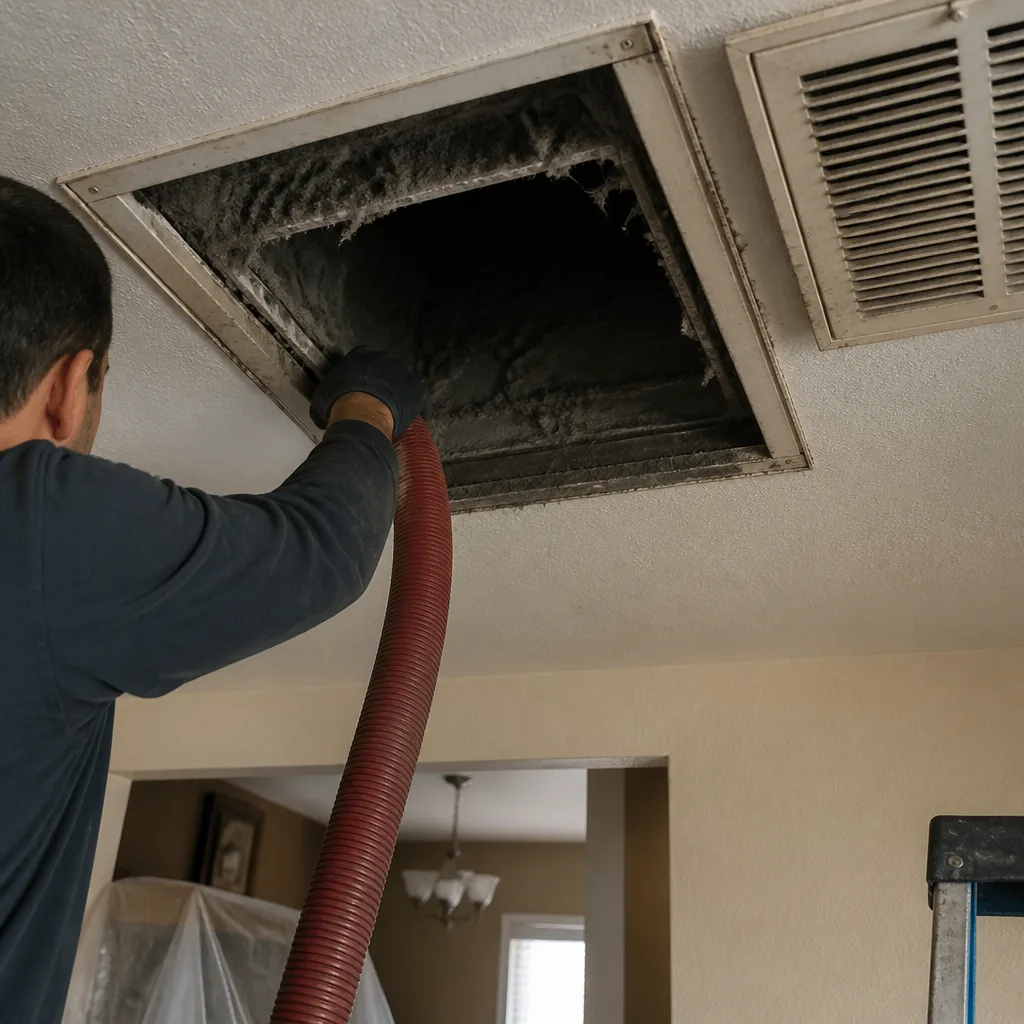 Before
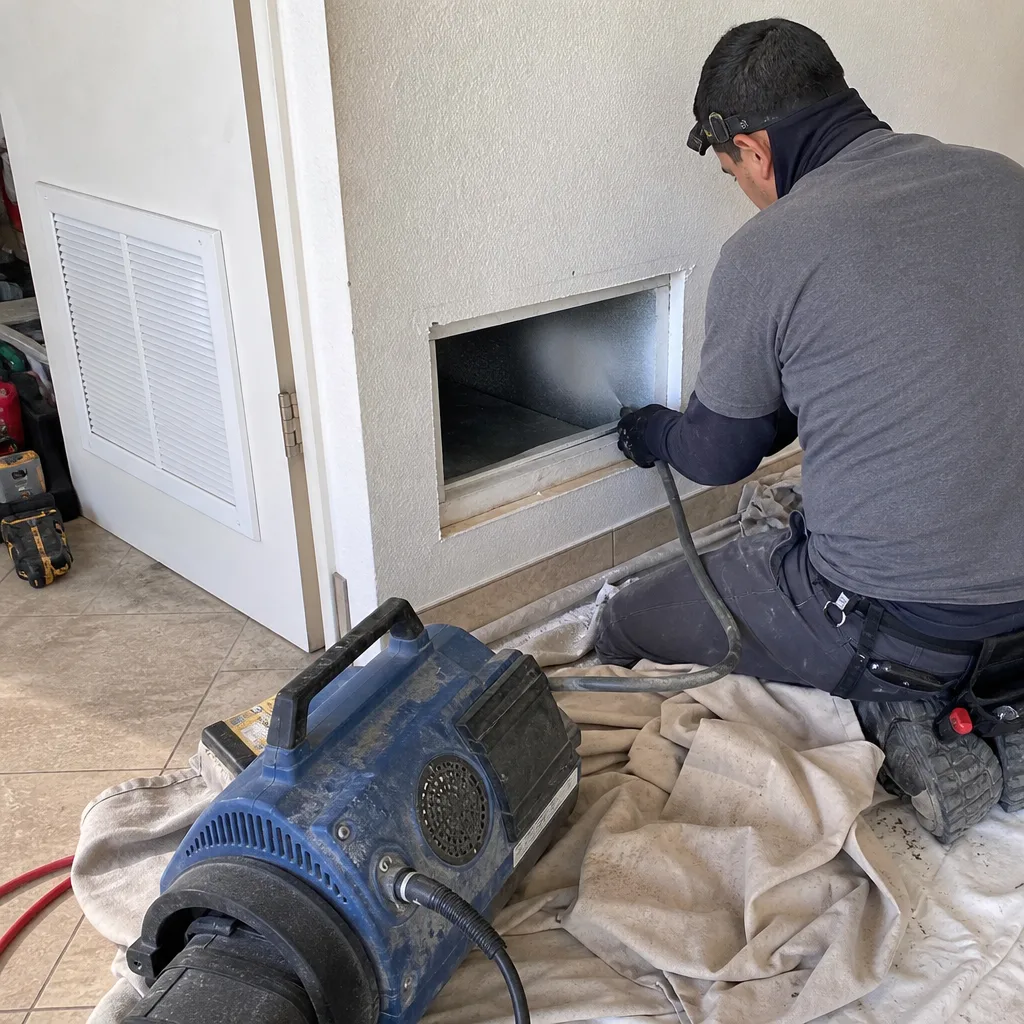 After
After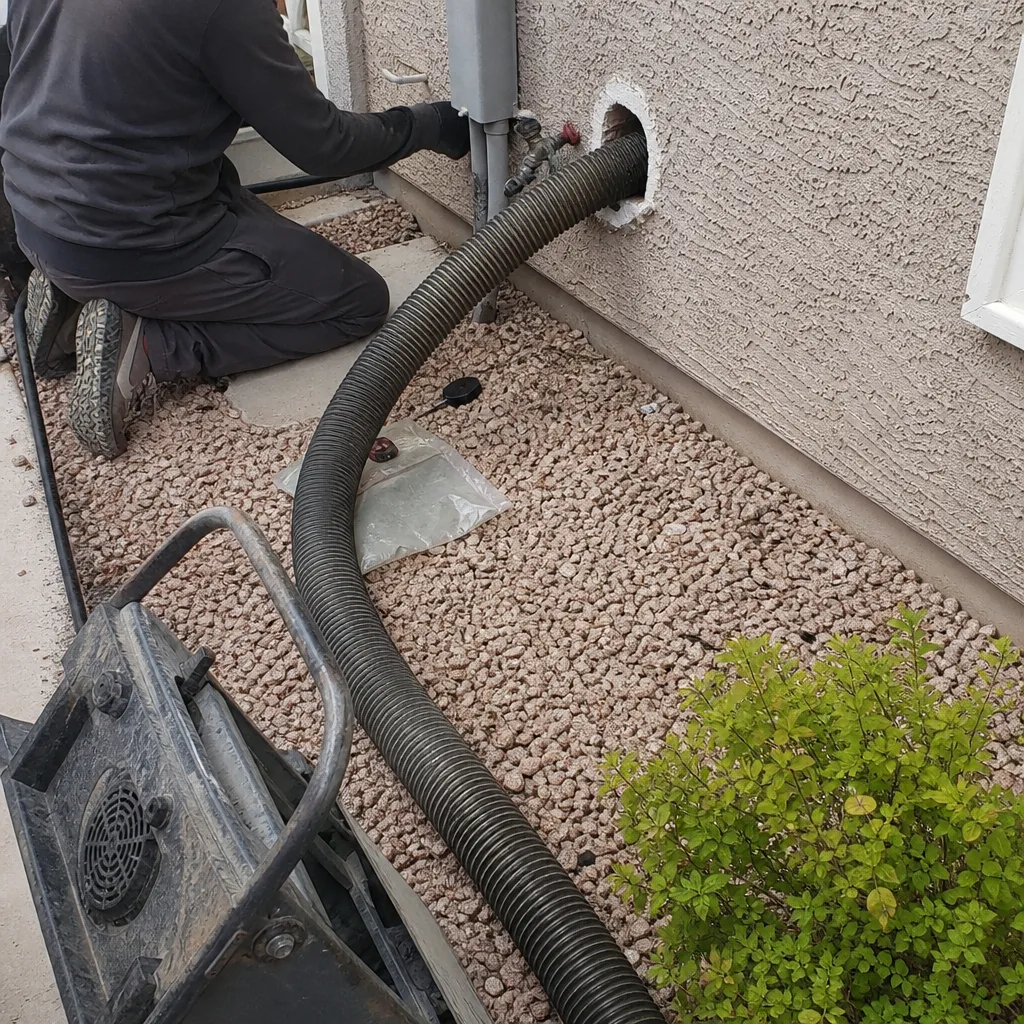 Before
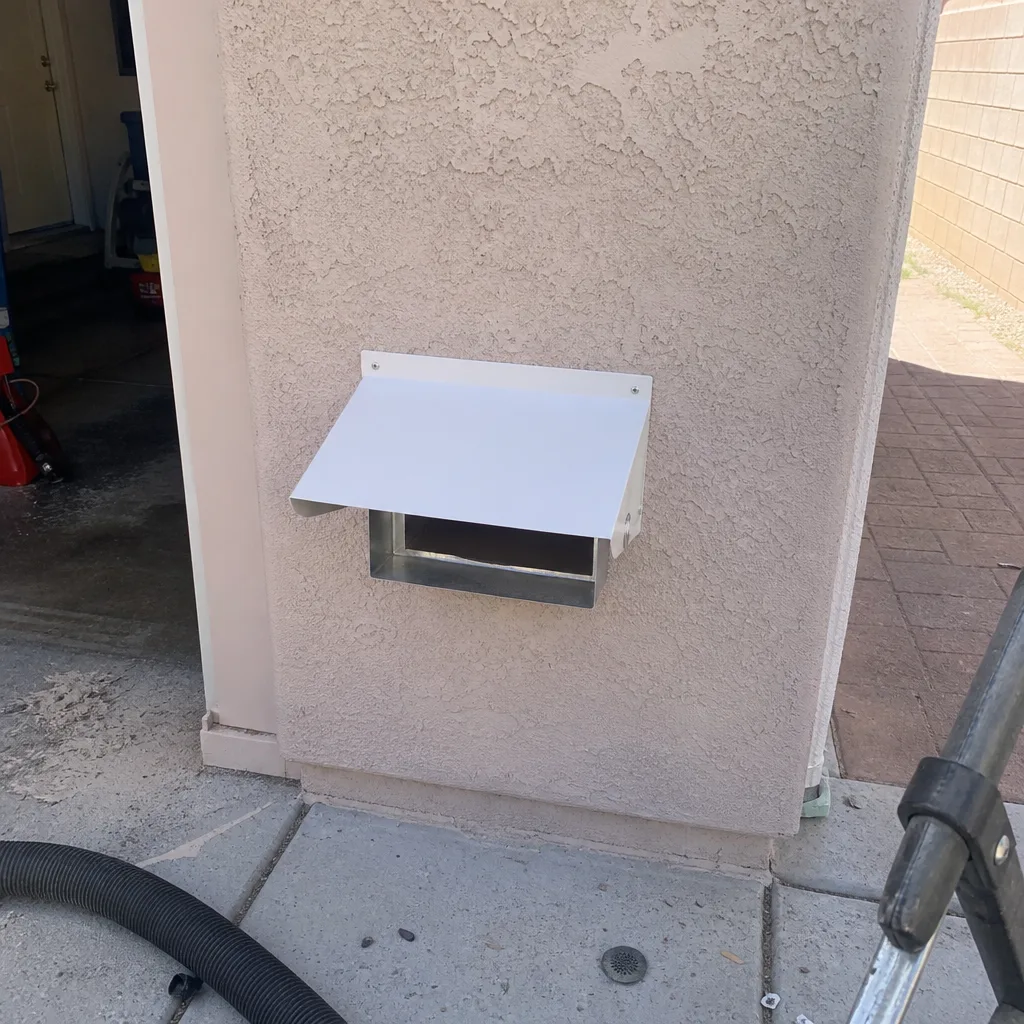 After
After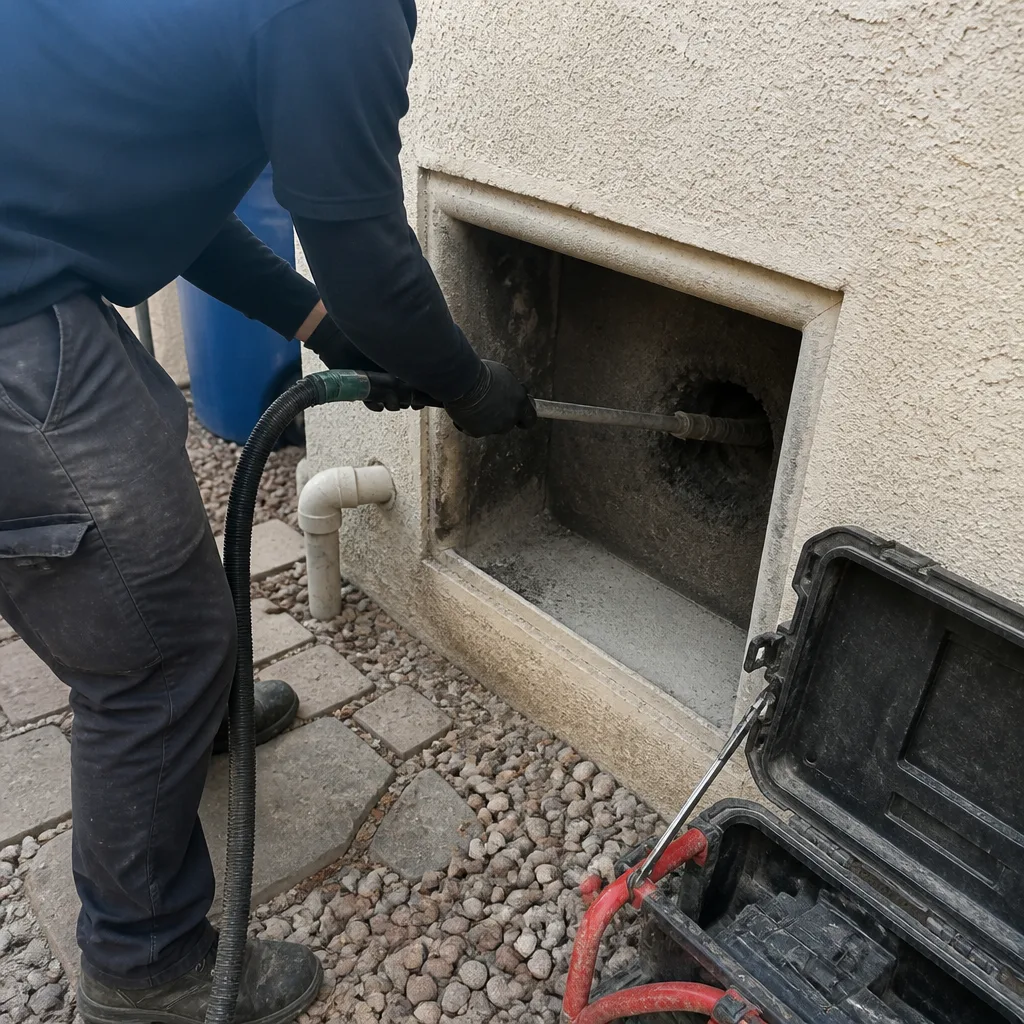 Before
 After
AfterReplacement Cost & What’s Included
Register and grille cleaning in Las Vegas runs $45 – $95 per register installed, and the total for a typical 8 – 12 register home lands between $360 and $1,140. The spread is driven by a few things: register size and condition, whether the register needs replacement instead of cleaning, and whether we’re also addressing the duct boot behind it. A severely corroded Honeywell register might cost $55 – $90 to replace with a new OEM unit plus labor, and we’ll always show you the old part and the new part side by side before we make the swap.
Every register cleaning job includes removal of the register from the duct, a degreasing bath, louver-by-louver hand detailing, sanitizing, and reinstallation with a fresh foam gasket if the original is compressed. We also photograph each register before and after, and you’ll see those photos in your Relay Standard booking. The written price you get before we start is the price you pay, and it’s backed by our 365-Day Done Right Promise. If a register we cleaned shows buildup again inside a year, we come back and redo it at no charge.
DIY or Call Us?
Registers are one of the few HVAC components where a careful homeowner can do a legitimate job alone. You can remove a Honeywell register with a screwdriver, wash it in warm water with a heavy-duty degreaser like Krud Kutter or Simple Green Pro HD, scrub the louvers with a soft-bristle brush, rinse, dry completely, and reinstall. That handles surface-level grime on registers in decent shape. Be honest with yourself about whether the buildup is surface film or something set in. If the louvers have a tacky residue after washing, or the powder coat is flaking, or you can see black speckling inside the louver pivots, hand-cleaning won’t resolve it. You’ll also want to avoid glass cleaner with ammonia on aluminum face plates; ammonia dulls the anodized finish permanently.
Where DIY goes wrong is the duct side. Homeowners will pull a register, notice the duct boot behind it is filthy, and start reaching in with a vacuum wand or paper towels. That drives debris deeper into the duct run and irritates any microbial growth inside. If what’s behind the register looks bad, leave it and call us at (725) 600-6597. We use HEPA-filtered negative-pressure extraction, which means the loosened debris gets pulled straight into the Nikro vacuum, not pushed further down the line or blown back into your living room.
FAQs
Every 18 to 24 months in the Las Vegas Valley, more often if you cook frequently, burn candles, have pets, or live near a construction zone. The desert dust load here is relentless, and registers collect more of it than anywhere else in the system because they sit in the direct airstream. Call (725) 600-6597 and we’ll assess yours.
Registers with minor damper rattle or a loose louver can usually be repaired on the bench with pivot tightening and lubrication. Registers with flaking powder coat, rust-through at the screw holes, or bent louver frames should be replaced because no cleaning will restore structural finish. We’ll show you the damage before recommending replacement.
A full-home register cleaning for 8 – 12 Honeywell registers takes about 2 to 3 hours on site. That includes removal, cleaning, drying time, and reinstalling with fresh gaskets. We book it as a morning or afternoon slot, and you’ll have a live arrival window through The Relay Standard so you’re not waiting around.
We carry common Honeywell HC and FL series sizes in white, almond, and brushed nickel on our Las Vegas trucks, including the HC24 narrow size older Spring Valley and Centennial Hills homes need. If yours is a less common size or finish, we order OEM and have it within a few days. Along with Honeywell, we also stock parts for Lennox, Trane, and Carrier systems.
Written by Omar Haddad, Owner & Lead Technician, Cardinal Air Duct Las Vegas at Cardinal Air Duct Las Vegas, serving Las Vegas and nearby areas.