
Last updated October 15, 2026
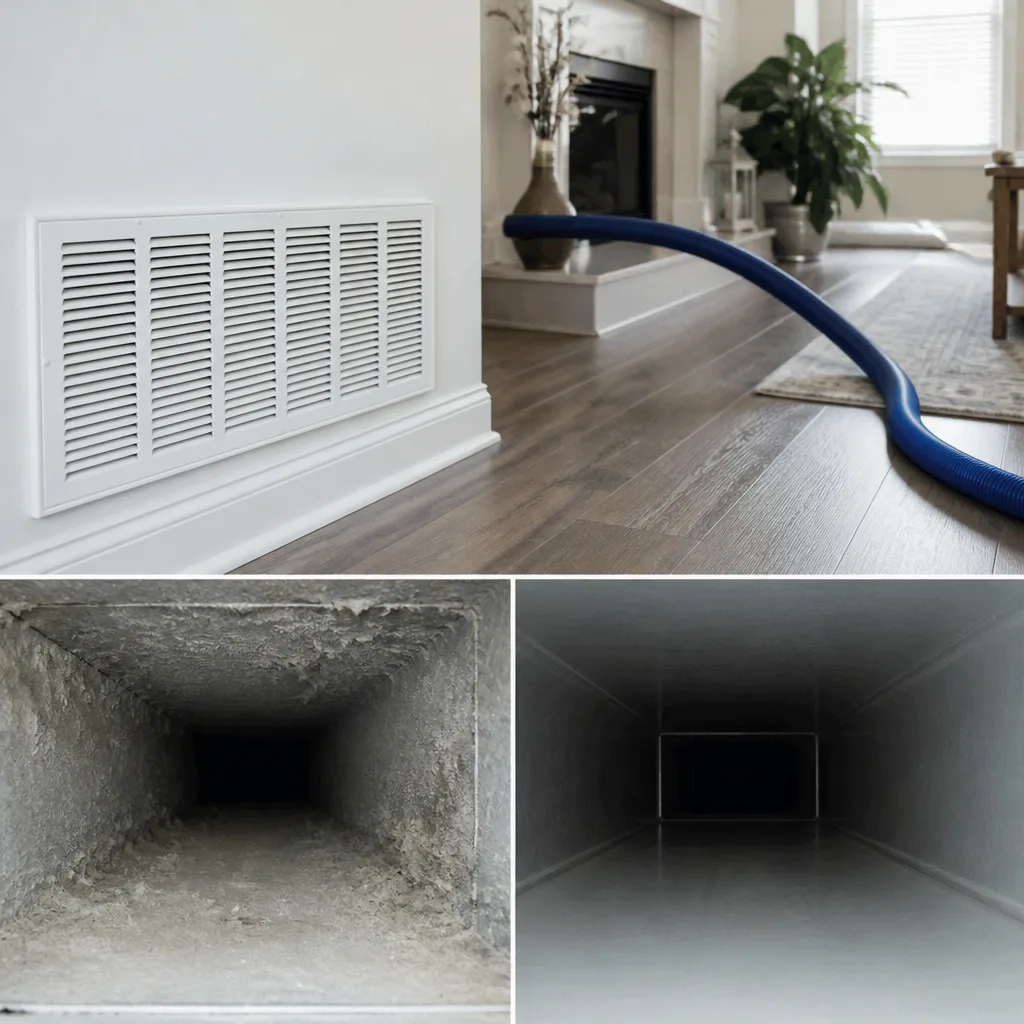 Whole-home duct cleaning
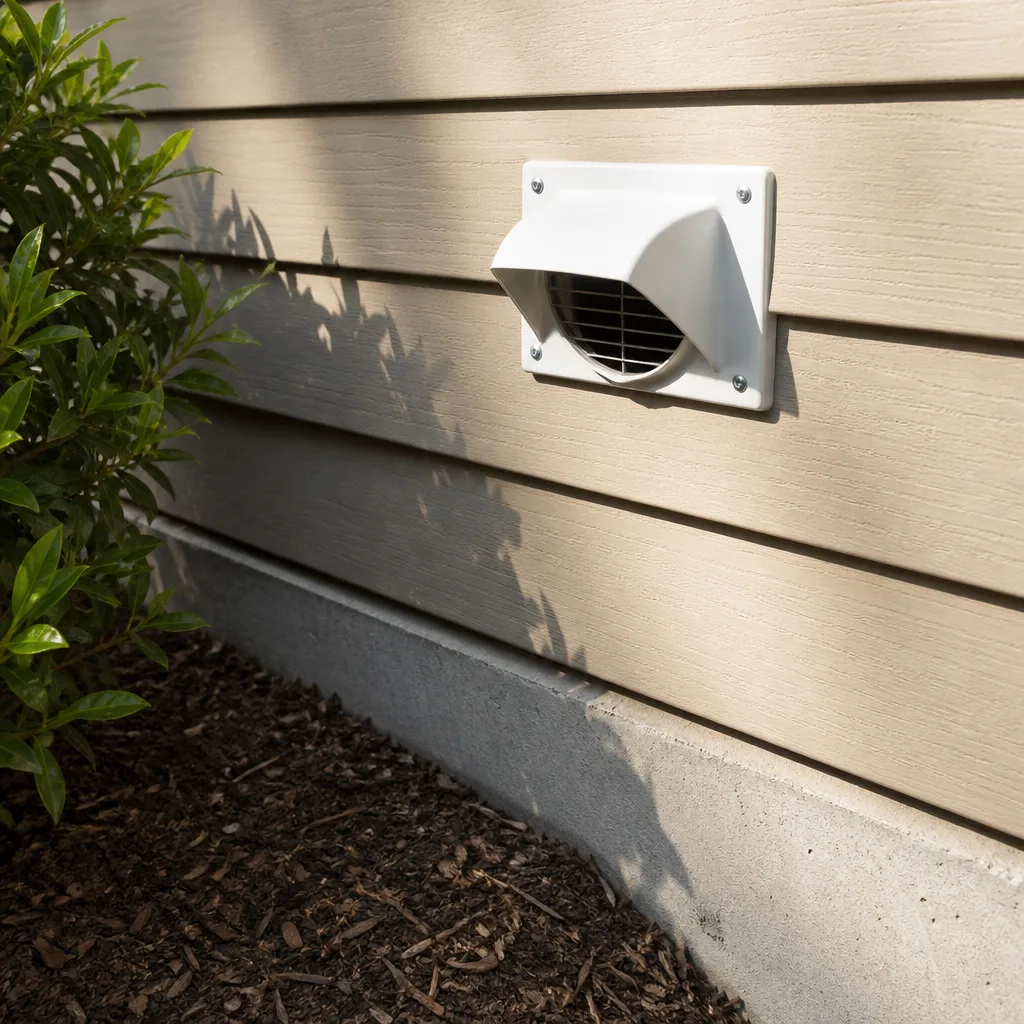 Dryer vent cleaning
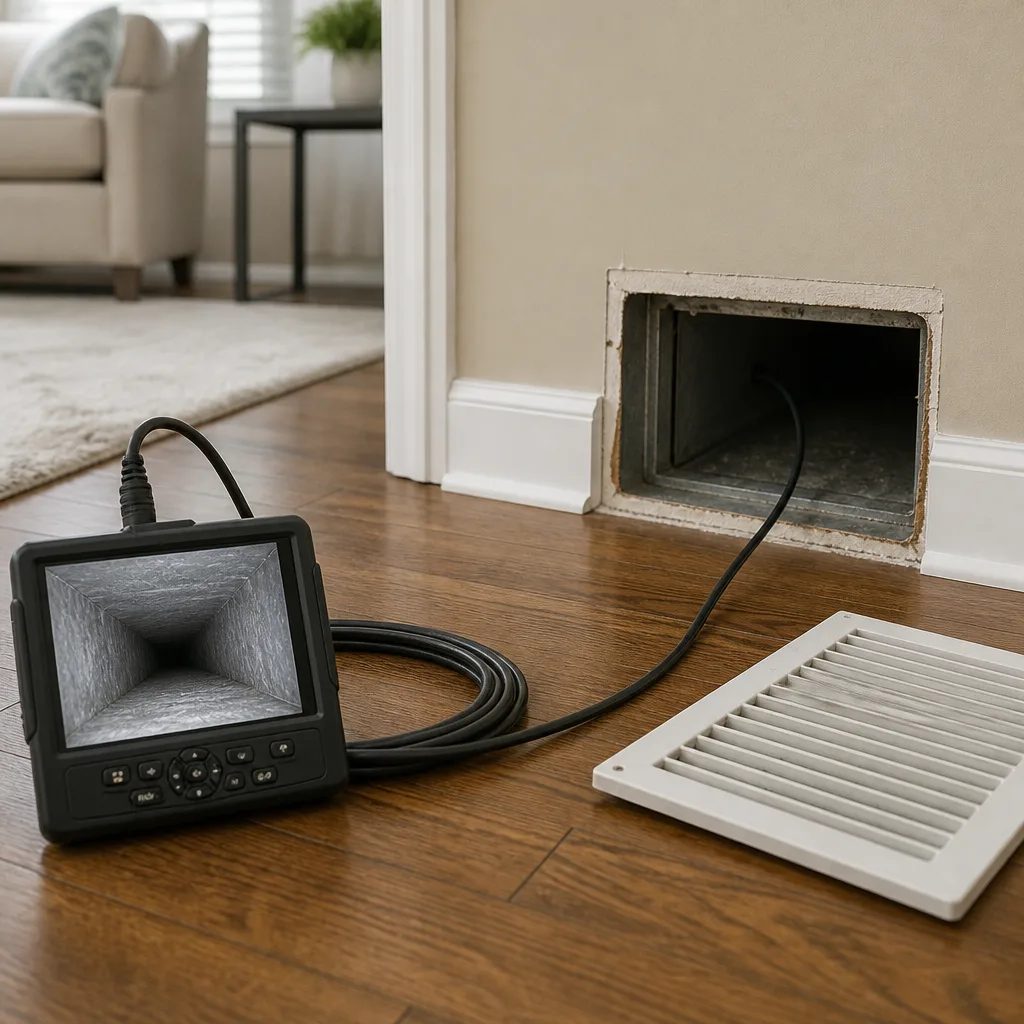 Camera inspection
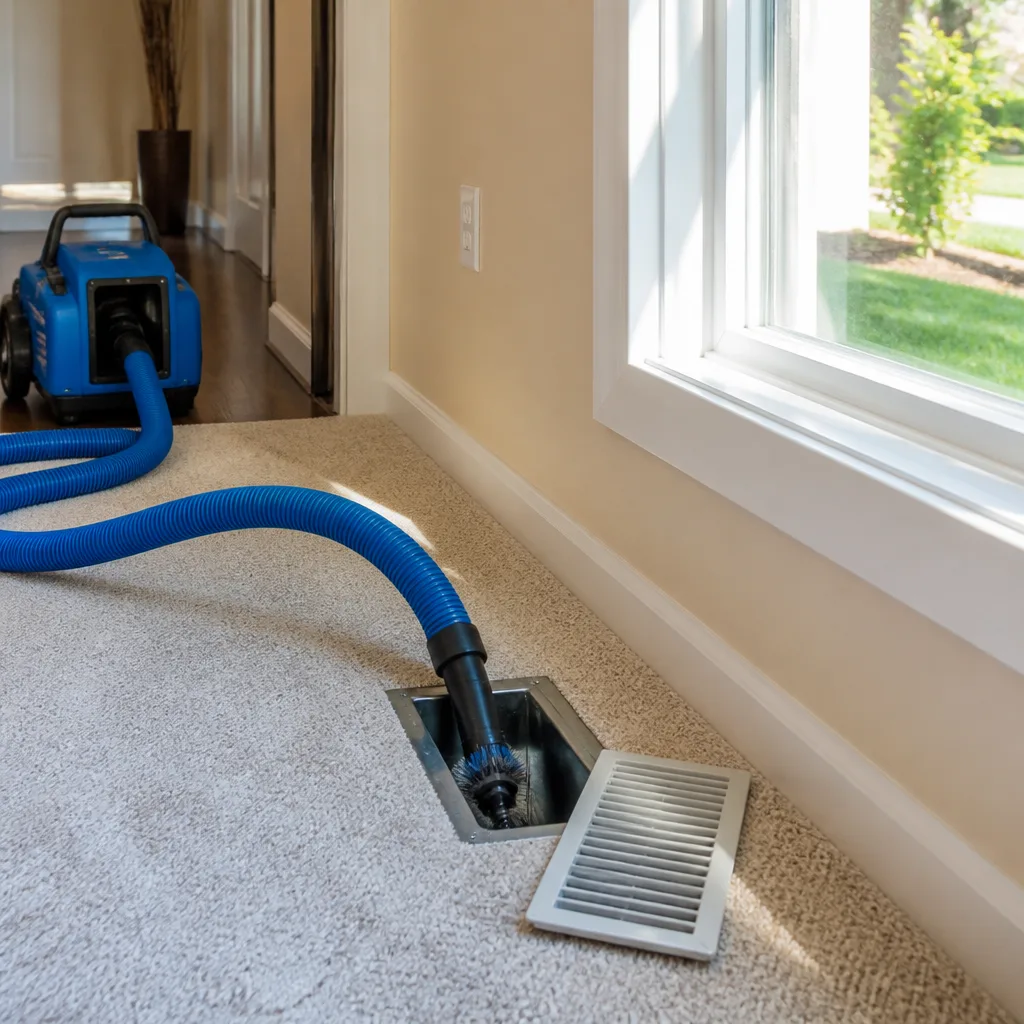 Sanitizing & deodorizing
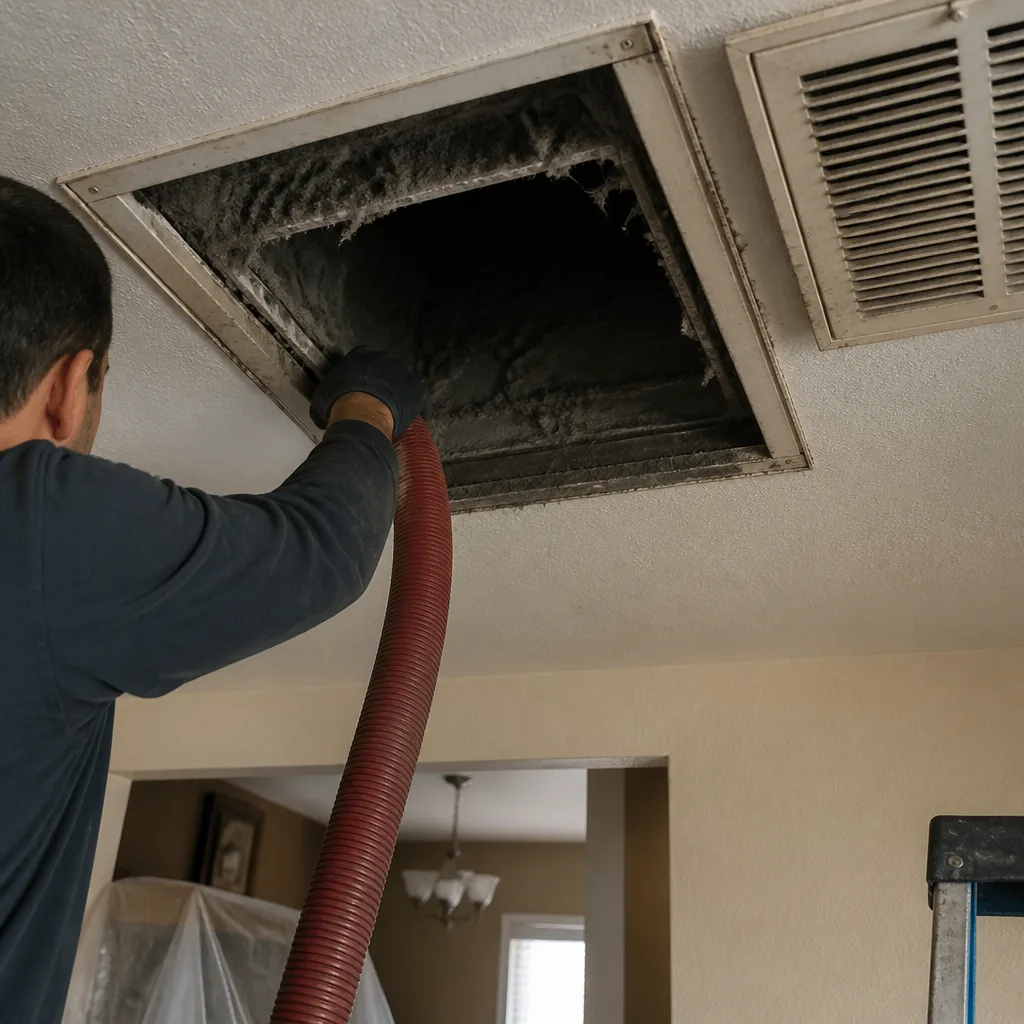
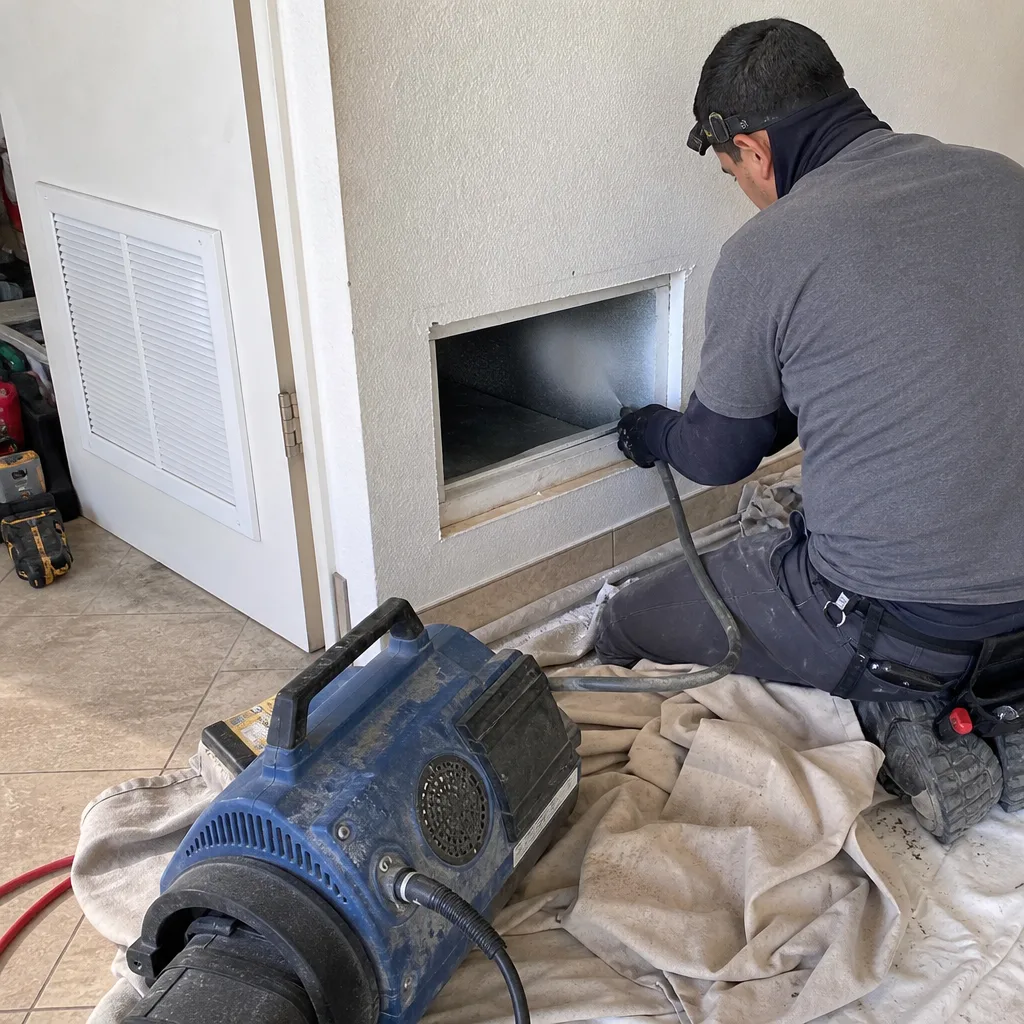
Whole-system duct and dryer vent check with before-and-after photos - you see exactly what came out of your vents
That "$99 whole-house special" is a bait ad - the real number appears once they are in your hallway, or the "clean" is a shop-vac at the register. We photograph the inside of your ducts before and after instead.
The Complete Guide to Air Duct Cleaning in Las Vegas
The average Las Vegas home pulls in more than 40 days of “unhealthy” particulate air every year according to IQAir monitoring data, yet the duct system responsible for filtering every breath indoors typically gets cleaned once a decade, if ever. That’s not a maintenance schedule. That’s a gamble. In a city where caliche dust coats everything within 72 hours and summer temperatures push 115°F, your air ducts are working harder than ducts in almost any other major American city. This guide explains what actually builds up inside Las Vegas ductwork, why it happens faster here than in Phoenix or Dallas, what a legitimate Air Duct Cleaning services should include, what it should cost, and how to verify the work was actually done before you pay the invoice.
Styles & brands we work with
Quick Answer
Air duct cleaning in Las Vegas typically costs between $450 and $900 for a standard single-system home, depending on square footage, the number of vents, and how long it’s been since the last cleaning. A proper cleaning uses rotary brush agitation combined with negative-pressure HEPA extraction, takes 3 to 6 hours, and should include before-and-after photo documentation of the interior duct surfaces. In Las Vegas specifically, most homes need cleaning every 2 to 3 years, not the 5 to 7 years national guides suggest, because caliche dust and extreme heat cycling accelerate buildup far beyond the national average.
Table of Contents
- Why Las Vegas Ducts Fail Faster Than Anywhere Else
- What Actually Builds Up Inside Las Vegas Ducts
- The Caliche Problem: Alkali Dust and Flex Duct Liners
- What the NADCA ACR Standard Actually Requires
- Rotobrush vs. Nikro: Understanding the Equipment
- How Much Does Air Duct Cleaning Cost in Las Vegas?
- How Often Should You Clean Your Ducts in Las Vegas?
- How to Verify the Work Was Actually Done
- Common Mistakes to Avoid
- When to Call a Professional
- Frequently Asked Questions
- The Bottom Line
Why Las Vegas Ducts Fail Faster Than Anywhere Else
Most national duct-cleaning guides are written for places like Ohio, Georgia, or the Pacific Northwest, so check our more guides & resources for local advice. They talk about pet dander, pollen, and humidity-driven mold. Those guides are useless here. Las Vegas has its own set of rules, and they’re harsher.
Three factors combine in Las Vegas that you don’t see in most of the country:
- Caliche dust. The Mojave Desert’s signature alkali soil produces a fine, mineral-heavy dust that’s chemically different from the organic dust in humid climates. It’s finer than sand, heavier than lint, and it bonds to surfaces rather than just settling on them. We’ll get into why this matters for cleaning in the next section.
- Extreme temperature swings. Las Vegas routinely swings 30 to 40 degrees between night and day, and over 60 degrees between summer highs and winter lows. Metal ductwork expands when the attic hits 140°F in July and contracts when it drops to 40°F on a January night. Every cycle loosens joints, tape seals, and connections just slightly. Over five years, those micro-gaps become entry points for attic dust, insulation fibers, and the particulates that should never make it into your living space.
- Near-zero humidity. In humid climates, dust clumps together and gets caught in filters. In Las Vegas, the air is so dry that dust stays loose, fine, and airborne. It travels deeper into the duct system before settling. That means buildup accumulates in the furthest reaches of branch lines, not just at the return registers where most people look.
We’ve cleaned ducts in Summerlin homes that looked spotless at the register but carried a quarter-inch of packed caliche dust through the entire trunk line. That’s the Las Vegas pattern, and it’s why this guide treats the city as its own category rather than a footnote to generic advice. If you’re looking for a general overview, start with our Air Duct Cleaning in Las Vegas page, but the specifics below are what actually matter here.
What Actually Builds Up Inside Las Vegas Ducts
When we open up a duct system in a Las Vegas home, we see a very consistent profile. It’s not a mystery, and homeowners should know exactly what’s accumulating in the air they breathe.
The typical buildup in a Las Vegas duct system, in order of volume:
- Caliche dust (30-50% of total). This fine, tan-to-white mineral powder is the single largest component. It’s abrasive, slightly alkaline, and it settles in a thin, even layer along the bottom of horizontal duct runs. Because it’s heavier than organic dust, it doesn’t blow out easily once it compacts.
- Skin cells and textile fibers (20-30%). The same stuff you’d find anywhere, but in Las Vegas it’s drier and lighter, so it circulates longer before settling.
- Construction debris (10-20% in homes under 10 years old). Las Vegas has been in a construction boom for two decades. Many homes in newer developments like Skye Canyon, Cadence, and Inspirada have drywall dust, paint overspray, and even small drywall screws left in the ducts from the original build. Builders are not required to clean ducts after construction, and most don’t.
- Attic insulation fibers (5-15%). As duct joints expand and contract with temperature swings, gaps open and fiberglass or cellulose insulation gets pulled into the system. This is a Las Vegas-specific issue tied directly to the temperature cycling mentioned above.
- Pet dander and hair (variable). In homes with pets, dander clings to the caliche dust layer and creates an allergen compound that’s harder to remove than either material alone.
- Biological growth (rare, but present). Las Vegas is too dry for the mold problems that plague humid climates, but condensate from AC coils creates localized moisture inside the system during summer. Where that moisture meets accumulated dust, you can get microbial growth in the coil area specifically, even if the rest of the ductwork is bone dry.
The takeaway: Las Vegas ducts don’t primarily collect what national guides describe. They collect mineral dust that compacts, construction debris from the building boom, and insulation pulled in through thermal cycling joints. Any cleaning approach that only addresses loose organic debris is treating a Las Vegas home like a Cleveland home. That doesn’t work.
The Caliche Problem: Alkali Dust and Flex Duct Liners
Here’s the part most competitors miss entirely, and it’s the single most important thing to understand about duct cleaning in Las Vegas.
Caliche dust is not ordinary dust. It’s an alkali mineral compound with a mildly caustic pH, and it behaves differently on the interior surfaces of flex duct than the organic debris most cleaning protocols are designed for. Organic dust (lint, dander, pollen) sits on top of surfaces. Caliche dust, because of its fine particle size and mineral composition, actually bonds to the synthetic liner material inside flex duct over time. This is the technique called adsorption, not just settling.
Why standard brushing alone misses it: A brush passes over the bonded layer and knocks loose the loose dust on top. But the caliche that has adhered directly to the liner stays put. It requires a combination of agitation and sustained negative-pressure airflow to dislodge, and in some cases, a second pass to get the residual film. We see this constantly in older Las Vegas homes, particularly in neighborhoods like Paradise, Sunrise Manor, and the older sections of Henderson, where flex duct has been in place through 10 or more Las Vegas summers.
The practical implication is simple: if a company quotes you $199 and says the job takes an hour, they are not addressing caliche bonding. They’re doing a surface pass that will look marginally better for a few months and then return to baseline. In Las Vegas, that’s the difference between cleaning your ducts and disturbing them.
What the NADCA ACR Standard Actually Requires
NADCA is the National Air Duct Cleaners Association, and their ACR (Assessment, Cleaning, and Restoration) standard is the closest thing this industry has to a rulebook. When a company says they follow “industry standards,” this is what they’re referring to. It’s worth understanding what that actually means so you can verify it on-site.
What the ACR standard requires a technician to do:
- Inspect and assess before cleaning. Before any equipment runs, the technician should inspect the system, identify access points, note any visible contamination, and document the condition. This is not optional. If someone starts shoving a vacuum hose into a register without looking at the system first, they’re not following the standard.
- Create negative pressure. The system must be placed under continuous negative pressure, meaning the vacuum is pulling air out of the ducts faster than the agitation is pushing debris around. This ensures loosened material flows toward the collection unit, not back into the living space.
- Agitate all interior surfaces. Every duct surface must be mechanically agitated to dislodge debris. This is where rotary brush systems come in. Agitation is the difference between cleaning and just sucking out loose dust.
- Clean all components, not just the ducts. The standard covers supply ducts, return ducts, registers, grilles, the blower motor and fan, the evaporator coil, the drain pan, and the air handler. A company that only pushes a hose down the registers is skipping most of the job.
- Verify and document. After cleaning, the technician should re-inspect and provide visual proof of the results. If a company can’t show you before-and-after photos of your own duct interior, you have no way to verify the work happened.
Here’s how to verify compliance on-site, in plain language: ask to see the access points before the work starts, confirm they’re running a negative-air machine (you should see a large vacuum unit with a HEPA filter, not a shop vac), and request photos of the coil and trunk line after cleaning. A legitimate technician won’t hesitate on any of these. If they deflect, that’s your signal. At Cardinal Air Duct Las Vegas home, we document every access point before and after as part of the Relay Standard, because you shouldn’t have to take anyone’s word for work you can’t see.
Rotobrush vs. Nikro: Understanding the Equipment
Not all duct cleaning equipment is created equal, and in Las Vegas, the equipment choice matters more than in most markets because of the caliche bonding issue. Here’s a straightforward breakdown of the two primary types of professional equipment, when each applies, and what to watch for.
Rotobrush rotary brush systems: Rotobrush is the dominant brand in rotary brush duct cleaning. The system uses a spinning brush head on a flexible shaft that’s fed through the ductwork from each register opening. The brush agitates the duct interior while a simultaneous vacuum pulls loosened debris into a collection unit. It’s ideal for: metal ducts, rigid round pipe, and lightly-to-moderately soiled flex duct in accessible residential systems. In Las Vegas homes with conventional trunk-and-branch layouts, Rotobrush equipment handles the volume and reach needed for typical single-family homes in areas like Green Valley, Centennial Hills, and Aliante.
Nikro negative-air machines: Nikro manufactures HEPA-rated negative air machines and vacuum collection units. These create sustained negative airflow through the entire duct system, pulling debris toward a central collection point while agitation (from a brush system or air whip) dislodges it. The Nikro units are what allow true negative-pressure cleaning, which the NADCA standard requires. For Las Vegas homes with extensive caliche buildup, heavier construction debris, or systems that haven’t been touched in 8+ years, the combination of Nikro negative air and rotary brush agitation is what actually removes the bonded layer.
The honest breakdown for Las Vegas homes: most single-family homes here are best served by a combination approach, rotary brush agitation paired with HEPA negative-air extraction. That’s not upsell language. That’s what the caliche problem demands. If a company arrives with nothing but a truck-mounted shop vac and a spinning brush on a drill, they’re running the wrong equipment for this climate, and the caliche layer will still be there when they leave.
How Much Does Air Duct Cleaning Cost in Las Vegas?
Here’s the number most people actually want. For a standard single-family home in Las Vegas, a legitimate full-system air duct cleaning runs $450 to $900. That’s the honest range for a complete NADCA-compliant job covering the supply and return ducts, registers, coil, blower, and drain pan. Homes over 3,000 square feet, homes with two systems, or systems that haven’t been cleaned in a decade can run higher, typically $900 to $1,400.
Price breakdown by home size in Las Vegas:
| Home Size (sq ft) | Typical Price Range | Time on Site |
|---|---|---|
| Under 1,500 | $450 – $600 | 3-4 hours |
| 1,500 – 2,500 | $550 – $750 | 4-5 hours |
| 2,500 – 3,500 | $700 – $900 | 5-6 hours |
| 3,500+ or dual system | $900 – $1,400 | 6-8 hours |
Why the $99 and $199 ads exist: those prices are for a partial job, usually the first 10 vents or a “basic cleaning” that doesn’t include the coil, blower, or trunk line. Once the technician arrives, the upsell begins, and the final invoice lands somewhere in the normal range anyway, just with more pressure and less trust. In our experience, most Las Vegas homeowners would rather hear the real number up front than get baited by a number that only exists to get a van in the driveway.
Cardinal Air Duct Las Vegas operates on written-before-work pricing. You get the full price on paper before a single duct is touched, and that number doesn’t change at the door. For HVAC Cleaning in Las Vegas, which covers the system components beyond the ducts themselves, the same principle applies.
How Often Should You Clean Your Ducts in Las Vegas?
National guides say every 5 to 7 years. Ignore them. That timeline was built for climates without caliche dust and without temperature cycling that pulls attic debris into the system. Las Vegas needs its own schedule.
Realistic cleaning frequency for Las Vegas homes:
| Home Profile | Recommended Interval | Why |
|---|---|---|
| New construction (under 5 years old), no pets | 3-4 years | Construction debris from the build needs one full clean; after that, standard Las Vegas accumulation applies. |
| Older home (10+ years), no pets, no whole-house filter | 2-3 years | Caliche buildup compacts quickly, and aging duct joints pull in more attic dust. |
| Any age, with indoor pets | 2-3 years | Dander binds with mineral dust and accelerates buildup throughout the system. |
| Any age, plus Aprilaire or Honeywell whole-house filtration | 3-4 years | Whole-house filtration catches more particulate at the source, extending time between cleanings. |
| Rental property between tenants | Every turnover | Landlords consistently underestimate how much tenant turnover disturbs and recolonizes the system. |
A whole-house filtration system from Aprilaire or Honeywell genuinely extends the interval. We’ve verified this across hundreds of Las Vegas homes: a properly installed media filter cabinet, combined with quarterly filter changes, keeps the trunk line visibly cleaner for longer. It doesn’t eliminate the need for cleaning, but it moves the timeline from every 2 years to every 3 or 4. If you’re not sure what you have, a quick visual check of your filter slot tells you: a 1-inch disposable filter is standard, a 4- or 5-inch media filter means you have whole-house filtration.
How to Verify the Work Was Actually Done
This is the question-DIY vs Professional Air Duct Cleaning: The Las Vegas Homeowner’s Decision Guide-that keeps Las Vegas homeowners on the fence, and it’s legitimate. Ducts are hidden. You can’t watch the work happen inside your walls. So how do you know you’re not paying $600 for someone to make noise for two hours and hand you an invoice?
Here’s the verification protocol we recommend to every Las Vegas homeowner:
- Demand before-and-after photos of the duct interior. Not photos of the equipment. Not photos of the technician holding a vacuum hose. Photos from inside your actual ductwork, showing the surface before and after. Modern duct cameras make this trivial. If a company can’t or won’t provide them, assume the job wasn’t done thoroughly.
- Ask to see the access points. A legitimate cleaning requires the technician to cut or open access into the trunk line and major branches, then seal them properly afterward. If no access points were opened, the technician was working blind through register openings, which means the trunk line wasn’t cleaned.
- Check the coil. This is the fastest tell. Ask the technician to show you the evaporator coil before and after. In Las Vegas, the coil is the single most contaminated component in most systems because it runs constantly all summer. If the coil wasn’t cleaned, the job wasn’t complete, regardless of what the invoice says.
- Look at the return air duct after cleaning. Get a flashlight and look down the return register. You should see bare metal or clean liner. If you can still see a visible layer of dust, call the company back and invoke whatever guarantee they offer. We back every job with the 365-Day Done Right Promise: if the work isn’t right within 365 days, we return and correct it at no charge. That’s the standard you should hold any company to.
- Feel the airflow. After a legitimate cleaning, you’ll usually notice stronger airflow at the registers, especially if the coil was cleaned. It’s not a formal test, but it’s a real-world signal that restriction was removed.
The Relay Standard, which applies to every Cardinal Air Duct Las Vegas booking, exists because this verification gap is the industry’s biggest trust problem. Every job includes before-and-after photo documentation and a digital invoice payable by link. You see the proof. You pay when the work is verified, not on faith.
Common Mistakes to Avoid
- Falling for the $99 special. That price is a trip charge with a hose attachment. You’ll pay the real price anyway, but under sales pressure and with less leverage. In Las Vegas, where legitimate cleaning starts at $450, anyone quoting under $250 is not doing a full-system job.
- Skipping the coil because “it’s an HVAC issue.” The coil is inside the same air path as your ducts. A company that cleans ducts but skips the coil is leaving the most contaminated component untouched and calling it done. That’s half a job.
- Cleaning every 7 years like national guides suggest. By year 5 in Las Vegas, most systems have a caliche layer that’s compacted and bonded. Waiting longer makes every subsequent cleaning harder and less effective.
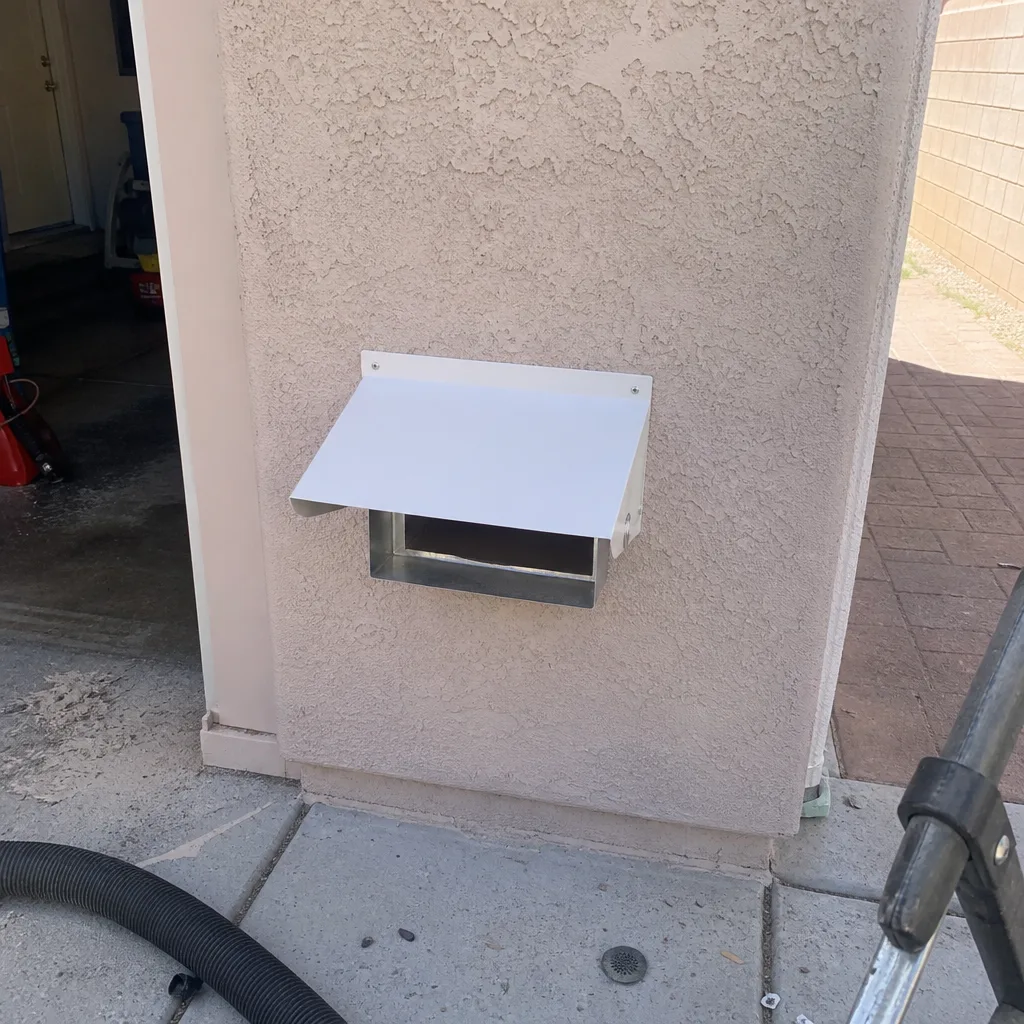
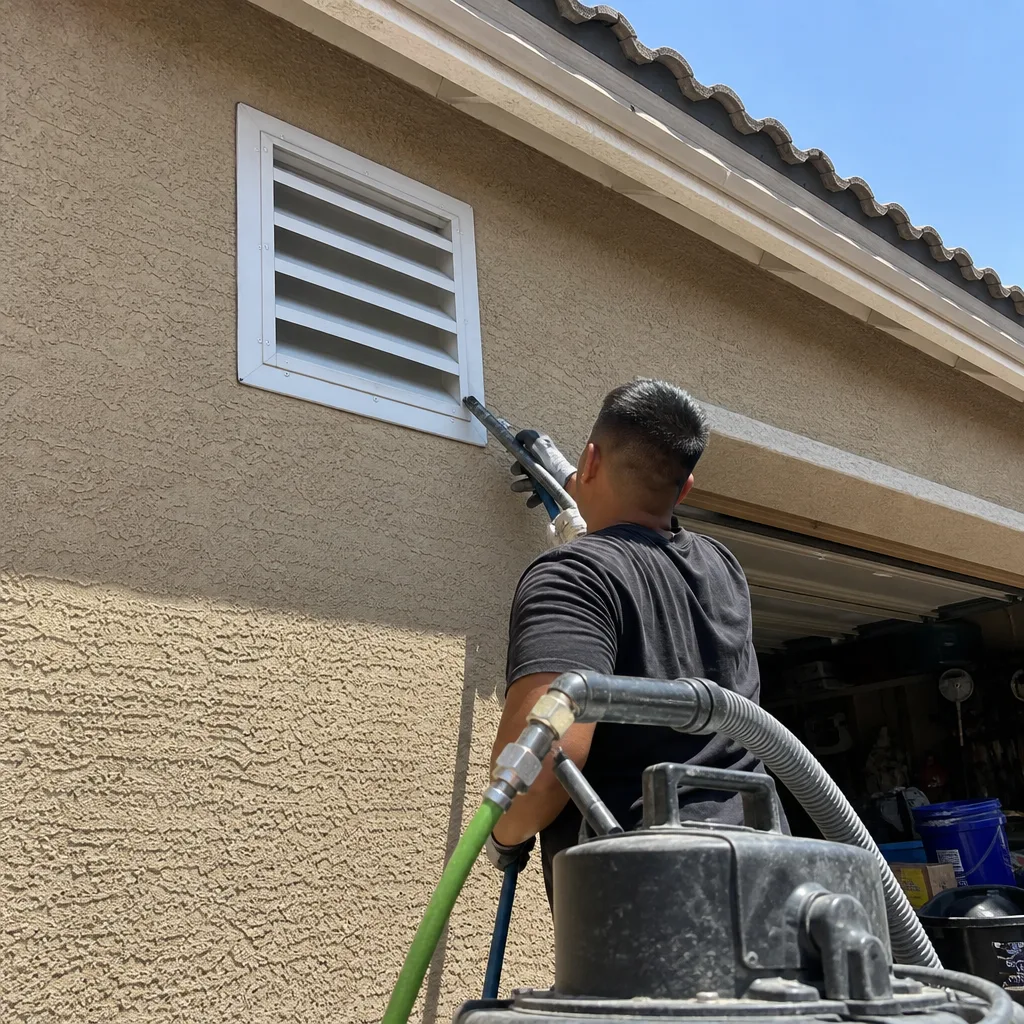
- Ignoring your dryer vent. It’s technically a separate service, but in Las Vegas, dryer vents clog with the same fine dust plus lint, and they’re the leading cause of dryer fires. We cover this separately in our guide to Dryer Vent Cleaning in Las Vegas, but don’t let a duct cleaning pass without addressing it.
- Assuming the builder cleaned the ducts. They didn’t. Las Vegas builders are not required to clean ducts after construction, and the drywall dust, sawdust, and debris left in new homes is substantial. If your home is under 10 years old and has never been cleaned, schedule a cleaning as soon as practical.
- Using fiberglass filters and thinking you’re protecting the system. The cheap blue filters catch about 15% of what passes through them. The remaining 85% goes straight into your ducts and coil. In Las Vegas, with the dust volume this climate produces, a pleated filter (MERV 8 or higher) is the minimum that actually helps.
When to Call a Professional
If you’ve lived in your Las Vegas home for more than three years without a cleaning, that’s the baseline trigger. Beyond that, look for visible dust accumulation around your registers, particularly the return. If your air filter is filthy within a month of replacement, the system is circulating pre-existing buildup. If you’ve had construction or remodeling done in the last year, drywall dust is in the ducts and won’t leave on its own. If your energy bills have crept up without a change in usage, a restricted coil and clogged ducts force the system to run longer. And if anyone in the home has persistent allergy symptoms that improve when they leave the house, the indoor particulate load includes your ducts. Cardinal Air Duct Las Vegas offers free estimates in Las Vegas and the surrounding valley, call (725) 600-6597, and a live person answers, day or night.
Frequently Asked Questions
A full-system air duct cleaning in Las Vegas runs $450 to $900 for most single-family homes, with larger or dual-system homes running $900 to $1,400. The range depends on square footage, number of vents, system accessibility, and how long it’s been since the last cleaning. Anyone quoting under $250 is not doing a complete NADCA-compliant job. Call (725) 600-6597 for a written quote specific to your home, free estimates included.
The cheap quotes are for partial jobs, usually a limited number of vents without coil cleaning, blower cleaning, or trunk line access. The low number exists to get the technician to your door, and the real price comes out once the job is underway. In Las Vegas, where caliche dust requires more thorough cleaning than most markets, a low price almost always means the bonded mineral layer won’t actually be removed. Get the full price in writing before work starts.
Require before-and-after photos of the duct interior, confirm the technician opened access points into the trunk line, and check that the evaporator coil was cleaned, not just the register openings. If the coil is still dirty, the job is incomplete regardless of what the invoice says. A legitimate company will document everything and invite you to inspect the results.
Every 2 to 3 years for most Las Vegas homes, more frequently than the national 5-to-7-year guideline; see our Dryer Vent Cleaning Maintenance Checklist for Las Vegas Homeowners for related upkeep. Caliche dust compacts quickly, extreme temperature swings pull attic dust into duct joints, and the AC system runs for months at a time. Homes with whole-house filtration from Aprilaire or Honeywell can stretch to 3 to 4 years. New construction needs one clean in the first 5 years to remove builder’s debris.
Yes, because the benefits aren’t only about allergens. A clean system runs more efficiently, which matters when your AC is your largest summer energy expense in Las Vegas. A restricted coil and dust-packed ducts force the blower to work harder and run longer. Cleaning also removes abrasive caliche dust that accelerates wear on the blower motor and other components.
Partially. A cleaned duct system won’t recirculate the dust already trapped inside, which helps immediately. But Las Vegas dust enters the home through doors, windows, and the building envelope, and no duct cleaning stops that. The combination that works here is: clean ducts, a pleated MERV 8 or better filter changed every 30 to 60 days, and ideally a whole-house media filter from Aprilaire or Honeywell. Call (725) 600-6597 and we’ll walk through what’s right for your specific home.
The Bottom Line
Las Vegas ductwork has a problem that national guides don’t address, and that’s the entire point of this guide. Caliche dust bonds to duct liners in a way organic debris doesn’t. Temperature swings create gaps that pull in attic dust. And the near-zero humidity keeps particulates airborne and circulating longer. The practical result: you need cleaning more often here than anywhere else, you need the right equipment doing it (rotary brush plus negative-air HEPA extraction, not a shop vac), and you need proof the work happened. That’s what the 365-Day Done Right Promise and The Relay Standard were designed for, written pricing before work starts, before-and-after photo documentation, and a full year to make sure it was done correctly. Call (725) 600-6597 and a live person answers, day or night.
Written by Omar Haddad, Owner at Cardinal Air Duct Las Vegas, serving Las Vegas since 2005.
See the difference
 Before
 After
After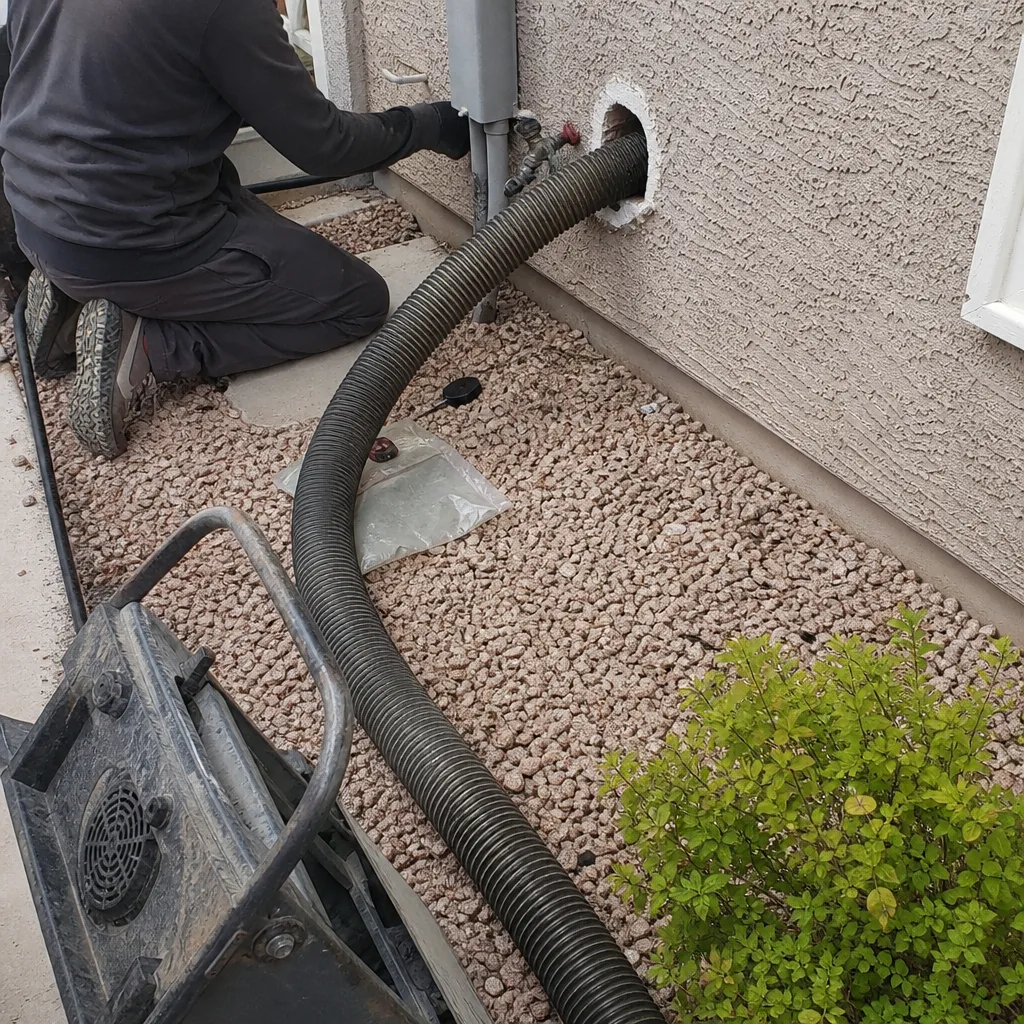 Before
 After
After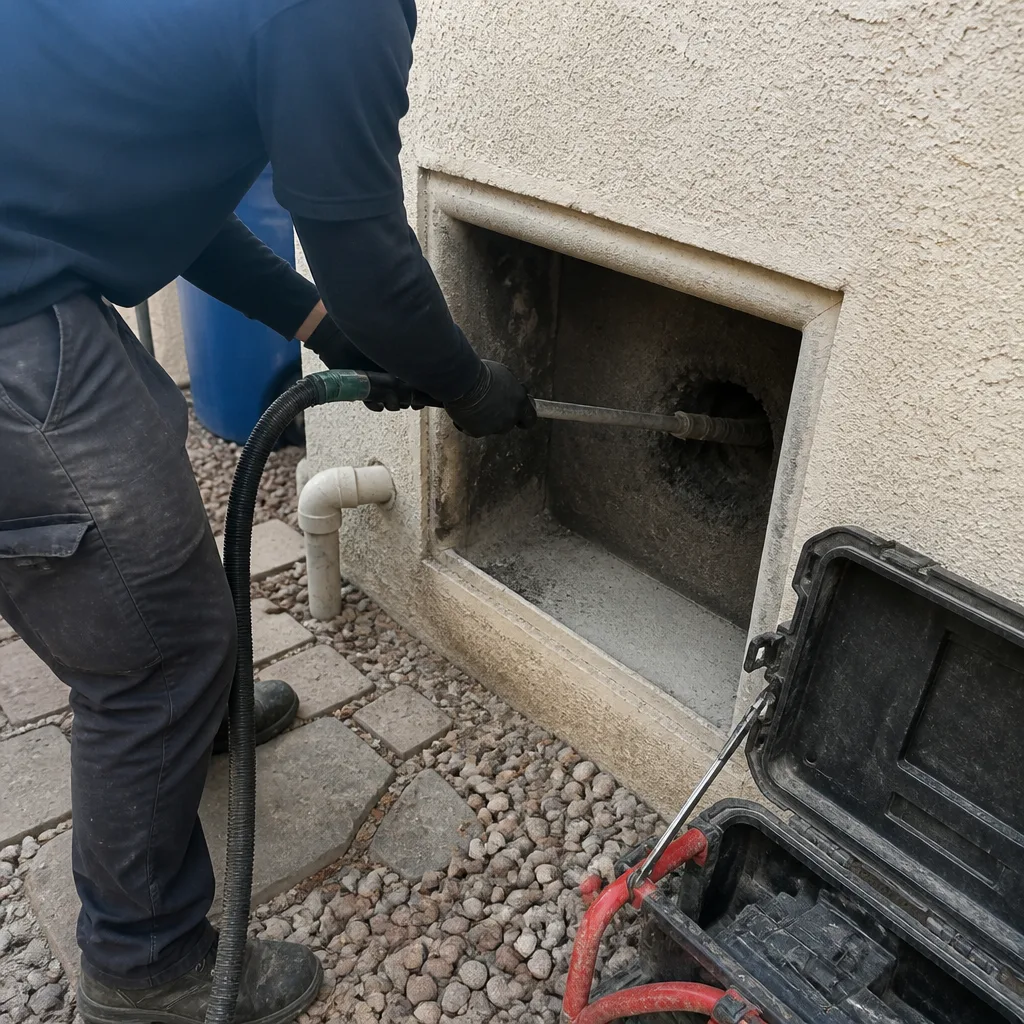 Before
 After
After