
Last updated October 15, 2026
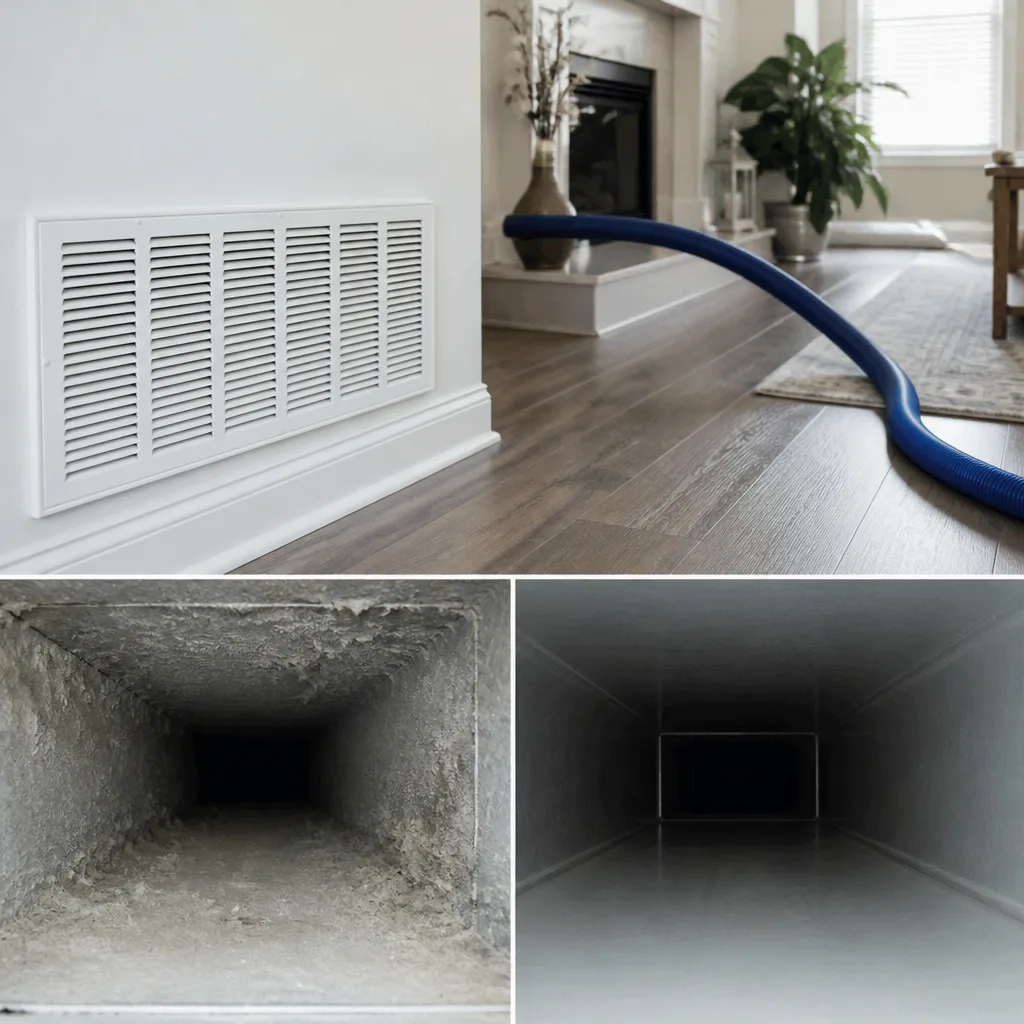 Whole-home duct cleaning
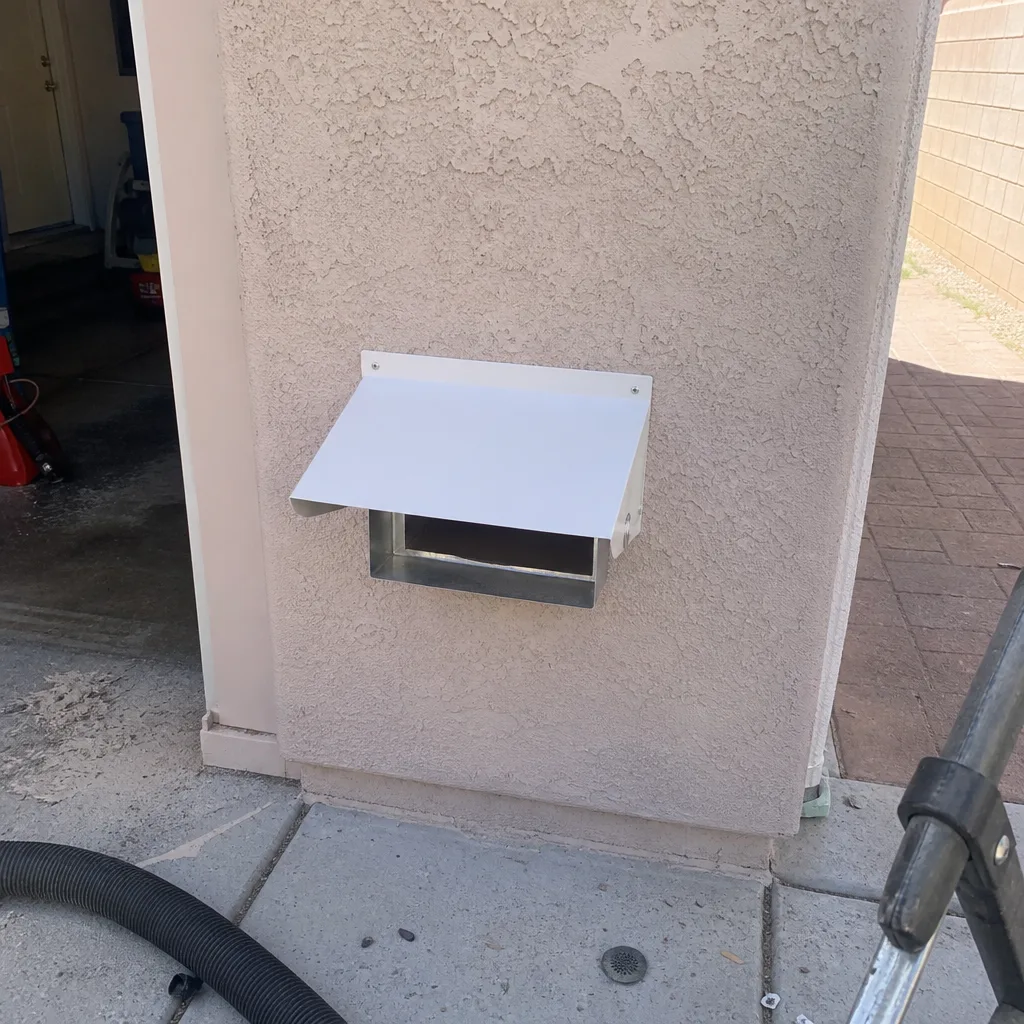
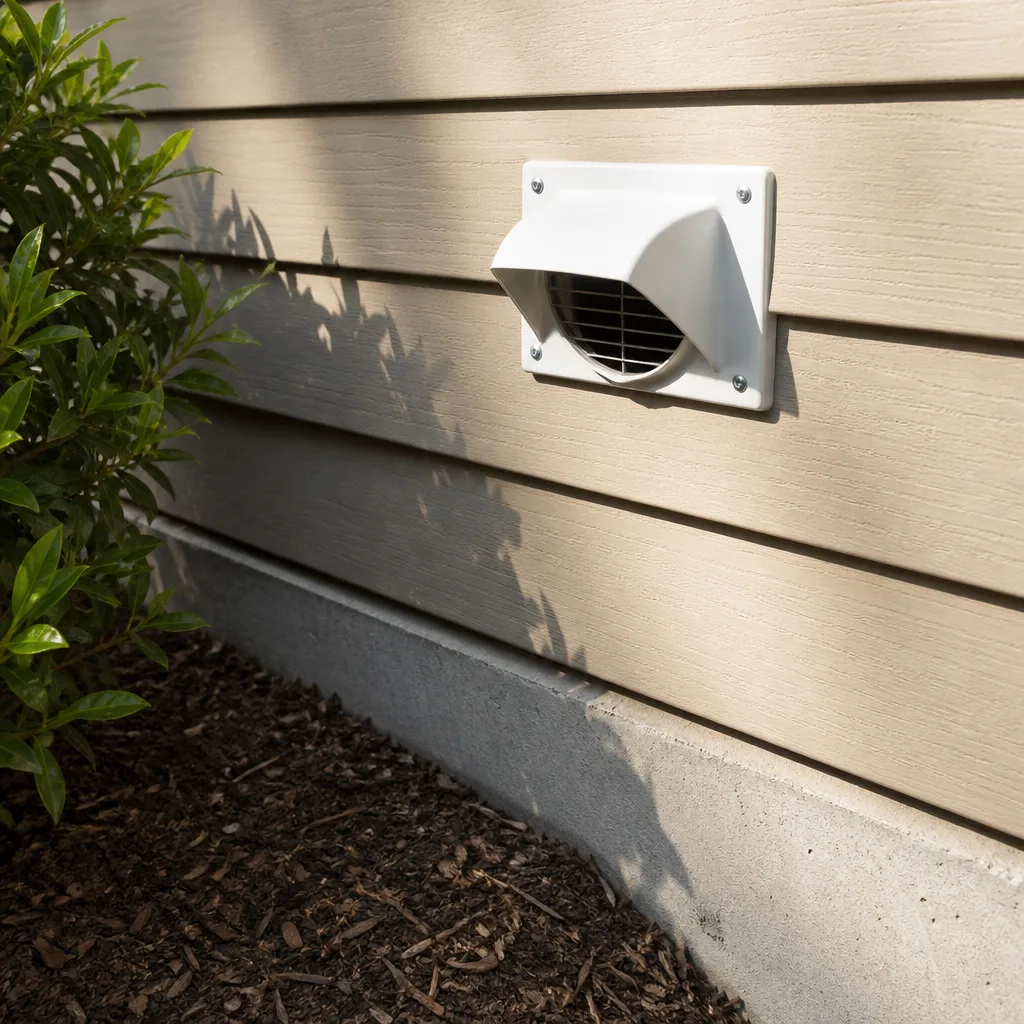 Dryer vent cleaning
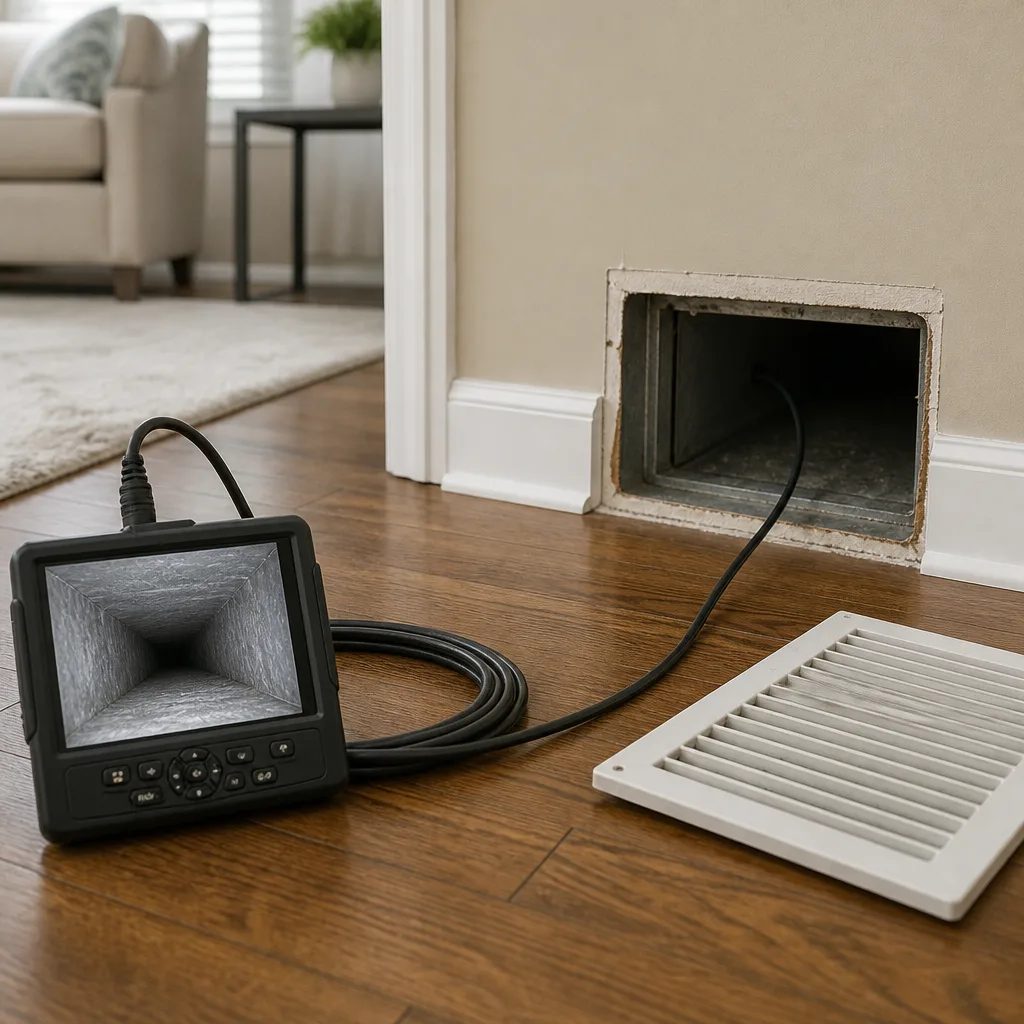 Camera inspection
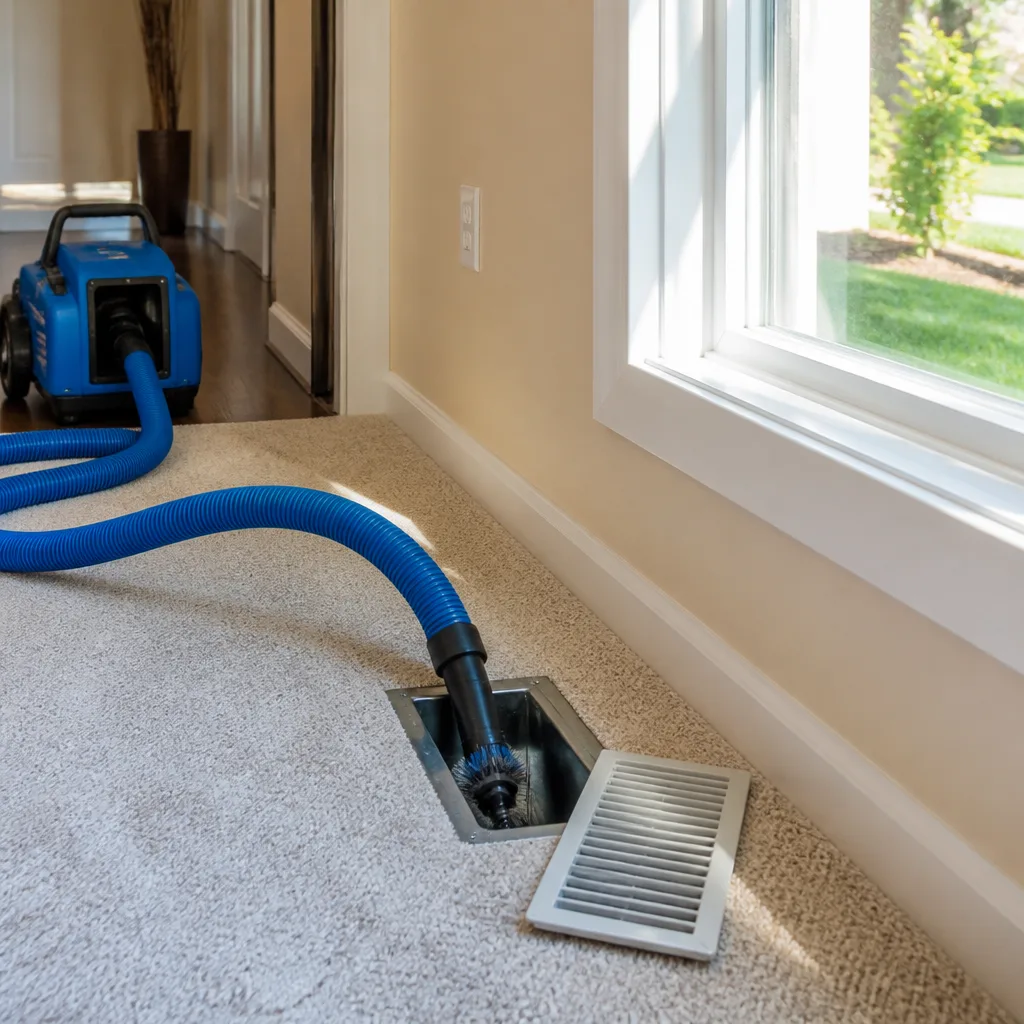 Sanitizing & deodorizing
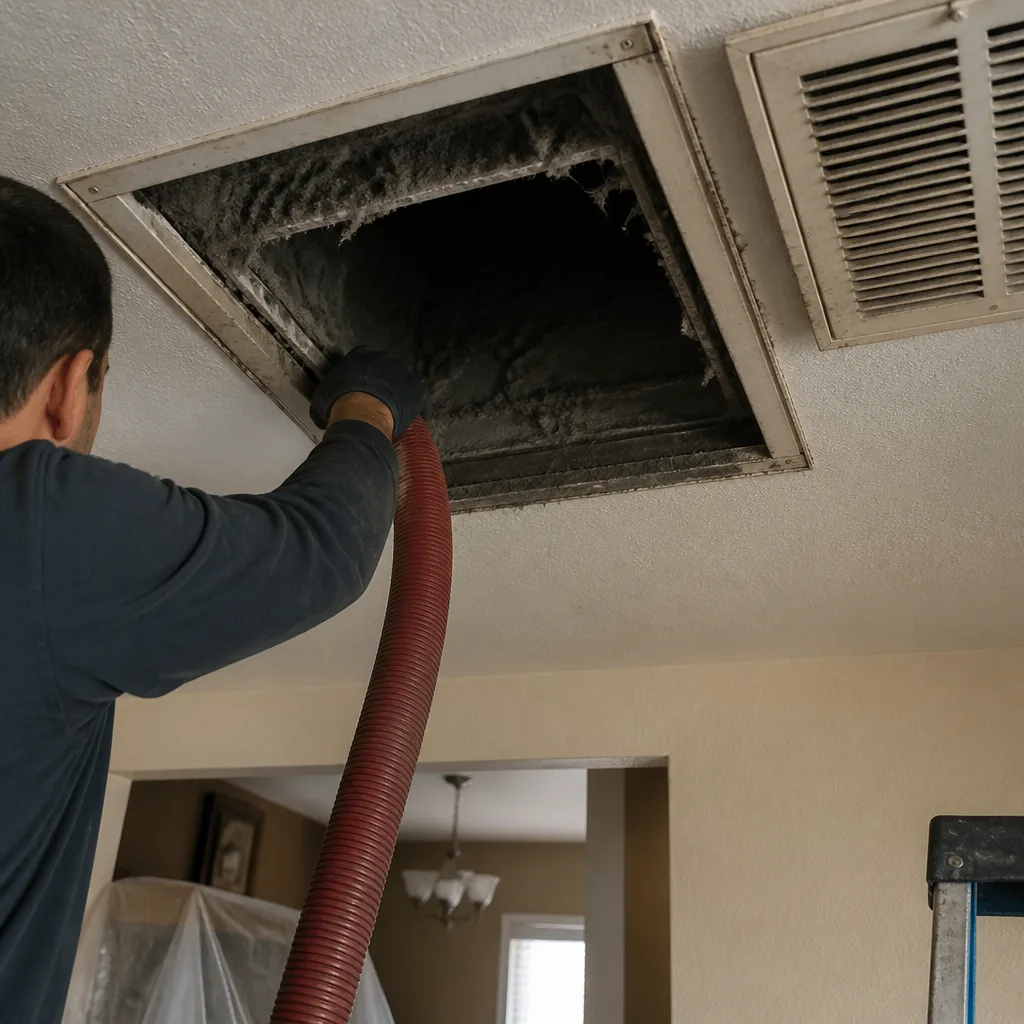
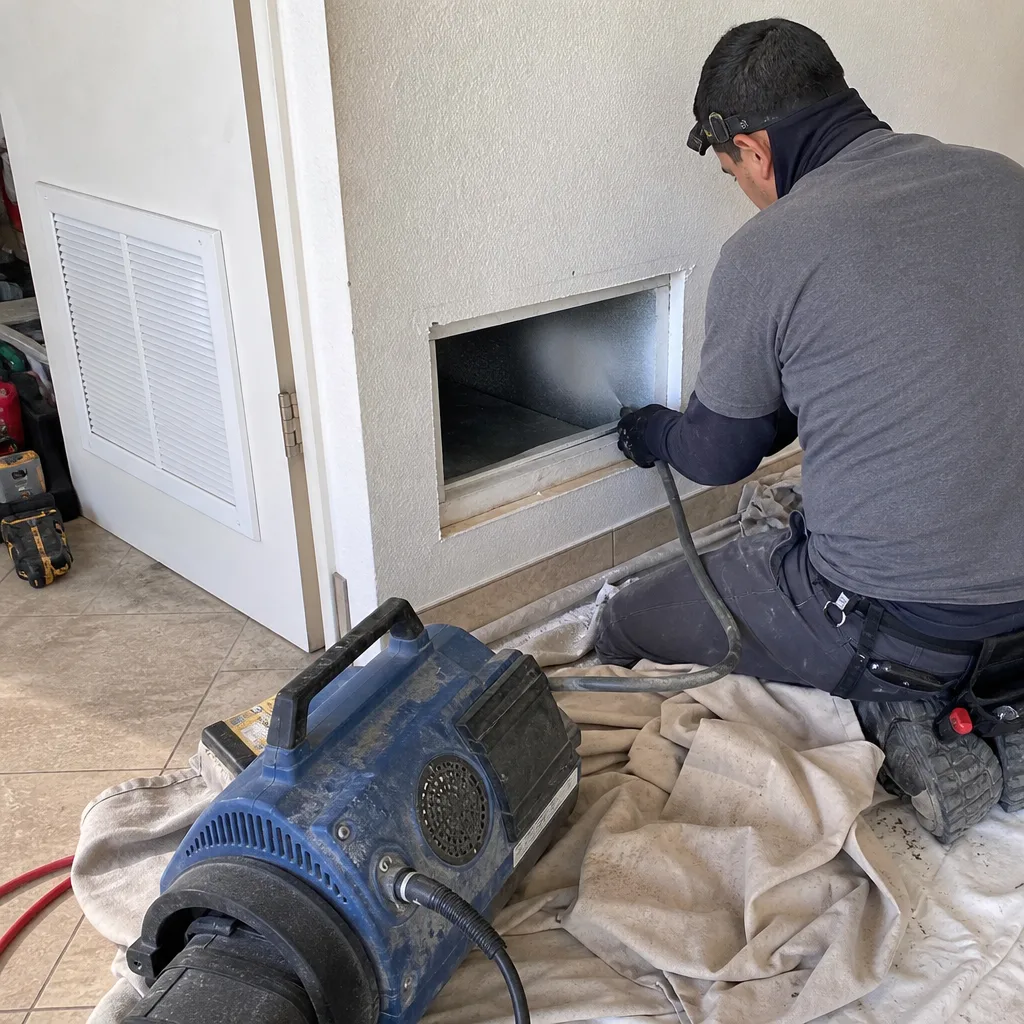
Whole-system duct and dryer vent check with before-and-after photos - you see exactly what came out of your vents
That "$99 whole-house special" is a bait ad - the real number appears once they are in your hallway, or the "clean" is a shop-vac at the register. We photograph the inside of your ducts before and after instead.
Air Duct Cleaning Warning Signs: A Las Vegas Homeowner’s Reference Guide
Most articles about air duct cleaning warning signs start with visible dust around a vent cover and stop there. That advice works in places with dirt basements and seasonal pollen. It does not work in Las Vegas, where a 5-ton AC unit can move 2,000 cubic feet of air per minute through your ductwork for 9 months straight without you ever seeing a single particle at the register. What you do see is a utility bill that climbs $40 in a month, a bedroom that never gets below 78 degrees, and a fine gray film that reappears on your furniture two days after you dust. That film is caliche dust, and it is the single most common warning sign our technicians find in Summerlin, Henderson, Spring Valley, and North Las Vegas homes. In this guide, you’ll learn how to read the signals your HVAC system sends before they become a $900 repair, and how to tell the difference between normal desert conditions and ductwork that is quietly failing.
Quick Answer
Air duct cleaning warning signs in Las Vegas rarely start with visible dust at a register. The earliest indicators are a utility bill that jumps more than 15% month-over-month without a rate change or weather anomaly, a temperature difference of 4°F or more between rooms on the same zone, and a fine gray film on return air grilles that comes from caliche dust. If you notice any of these three, your ductwork has a particulate buildup or physical compromise that professional cleaning or repair will resolve before it damages your HVAC equipment.
Styles & brands we work with
Table of Contents
- The Utility Bill Delta Test: Your First Warning Sign
- Room Temperature Variance: When One Room Never Cools
- Smell Mapping: Musty, Metallic, or Burning
- The Caliche Dust Test: Las Vegas’s Signature Signal
- Post-Remodel Dust: Why Construction Debris Requires Extraction
- Airflow Symptoms You Can Feel: Weak Registers and Whistling
- Biological Growth: What the Mojave Climate Does and Doesn’t Cause
- Common Mistakes to Avoid
- When to Call a Professional
- Frequently Asked Questions
The Utility Bill Delta Test: Your First Warning Sign
Your home’s ductwork rarely announces its problems. It underperforms, and your HVAC equipment compensates, and the only evidence you get is a number on a utility bill. Here is the test we recommend to every Las Vegas homeowner: pull up your NV Energy statements for the last 12 months. Find two consecutive months where the average outdoor temperature was within 5 degrees of each other. Compare the kilowatt-hours used. If the second month is more than 15% higher and you have not changed your thermostat habit, added occupants, or run a new appliance, the energy is going somewhere. According to EPA research on duct system efficiency, 20 to 30 percent of conditioned air in a typical home is lost to leaks, holes, and poorly connected ducts. In Las Vegas, where summer attic temperatures regularly exceed 140°F, that loss compounds fast. A duct leak pulling 130-degree attic air into an already-stressed system costs you money every single time the AC cycles.
The reason this is a duct problem and not an equipment problem: your AC unit does not decide to draw more power on its own. Something forces it to run longer. Dirty coils, failing capacitors, and low refrigerant all do that. But those problems typically show up as a system that struggles even when the ductwork is moving air. When the ducts are the issue, the equipment itself tests fine. We see this pattern regularly in Las Vegas homes with original ductwork from the 1990s and early 2000s. The unit works. The ducts leak. The bill climbs.
NV Energy offers a degree-day normalization tool on their website that adjusts your usage for weather variation. Use it. It removes the noise and lets you compare month-over-month consumption on an even playing field. If the normalized number still shows a 15% or larger spike, schedule an HVAC inspection. Ask the technician to run a static pressure test and a duct leakage test. Most Las Vegas techs have the tools. The ones that skip those tests are guessing.
Room Temperature Variance: When One Room Never Cools
A 2 to 3 degree difference between rooms on the same floor is normal in most homes. A 4 degree or larger difference on a single zone is a mechanical problem. In Las Vegas, where a west-facing bedroom can get hammered by afternoon sun, a 4°F gap often gets written off as “the hot room.” Dismissing it is expensive. We have found collapsed flex duct in attics, disconnected branch lines, crushed trunk sections, and improperly installed dampers in hundreds of Las Vegas homes where the owner just assumed the bedroom was always going to run warm.
Here is how to test whether your temperature variance is a duct problem or a sun problem. On an afternoon when the outdoor temperature is between 95°F and 105°F, set your thermostat to 76°F. Wait until the system has run at least two full cycles. Then walk the house with a digital thermometer. Visit each room, hold the thermometer at waist height, and record the reading. The rooms should land within 2 to 3 degrees of each other. If one room runs 4°F or warmer than the set point, take a close look at the register in that room. Is air coming out at all? How forcefully? Walk to the nearest return in that room. Does it pull a tissue toward the grille? A supply register with weak flow and a return that cannot hold a tissue against the grille signals a duct problem: a collapsed flex run, a disconnected takeoff, or a kink where the duct passes through the attic framing.
This is fixable. The repair is typically inexpensive compared to the damage caused by ignoring it. A bedroom that never cools forces your AC to run longer to satisfy the thermostat, which overshoots in the rest of the house and drives up your energy cost. In some cases, the strain on the blower motor shortens the equipment’s life. When we find collapsed flex duct in a Summerlin or Henderson attic, the fix is usually straightforward: remove the damaged run, install a properly supported section, seal the connections with mastic, and test the airflow. The whole job often costs less than one summer month of inflated energy bills.
Smell Mapping: Musty, Metallic, or Burning
Smells are useful diagnostic data if you know what they mean. Most homeowners smell something odd when the AC kicks on, shrug, and hope it goes away. In Las Vegas, where the system cycles constantly from May through October, an odor you notice once will happen hundreds of times before you act on it. Here is how to map the three smells that indicate ductwork problems.
Musty or damp smell. In the desert, a musty smell is not normal. It means moisture is present somewhere it should not be. The most common cause we find in Las Vegas homes is a condensate drain that is partially clogged, causing water to pool in the drain pan and support biological growth in the evaporator coil area. The smell travels through the ducts every time the blower runs. Sometimes the issue is in the ductwork itself: a humidifier left running, a leak that lets monsoon humidity into a return plenum, or a section of flex duct in contact with a sweating refrigerant line. Musty smells should be investigated quickly. Biological growth in an HVAC system is a health and performance issue, not something that goes away on its own.
Metallic smell. A hot metallic smell when the system runs indicates a component overheating. In ductwork, this is typically debris wrapped around the blower wheel or pulled into the motor housing. Dust, pet hair, lint from the laundry, and construction remnants all get drawn through return ducts. When enough of it accumulates on the blower, the motor works against the added resistance and heats up. The smell is the motor running hotter than design temperature. This is a genuine warning sign. Overheating motors fail. A blower motor replacement in Las Vegas runs $400 to $1,200 depending on the unit, and the damage is usually preventable with Air Duct Cleaning in Las Vegas before the debris load gets that far.
Burning smell. A burning smell from the registers when the heat kicks on is common in Las Vegas homes after a long summer of continuous AC use. Dust settles on the heat strips during the summer. The first few heating cycles each fall burn that dust off. The smell should fade within a few minutes of the first use. If it persists across many heating cycles, you have a significant dust load in the ductwork sitting close to the heat source, or a foreign object (insulation, a child’s toy, a piece of plastic) against the strips. Do not wait on a persistent burning smell. A technician should inspect the heat strip and the duct interior.
The Caliche Dust Test: Las Vegas’s Signature Signal
Las Vegas sits on caliche, a hardened layer of calcium carbonate that runs beneath the valley floor. Construction, wind, and dry conditions all churn it into an extremely fine dust that settles on everything. The dust is so fine that it passes through most standard air filters without resistance. It accumulates in ductwork, coats the interior surfaces, and gradually reduces airflow. Here is the problem: caliche dust at a register looks like ordinary dust. It does not alarm anyone. But the white cloth test will tell you whether your system is filtering it or circulating it.
Take a clean white cloth. Wipe the outside of a return air grille in a room that gets normal use. Look at the cloth. If the residue is dark gray or black, that is normal household particulate: skin cells, fabric fibers, tracked-in dirt. If the residue is light gray and chalky, that is caliche dust. Now wipe the supply register (the one that blows air out) in the same room. If you get the same chalky gray residue on the supply side, your filtration is bypassing. The dust is entering the return, passing through or around the filter, moving through the entire duct system, and exiting into your living space. That means the interior of your ductwork is coated with the same material. It is restricting airflow, degrading indoor air quality, and forcing your system to work harder than it should.
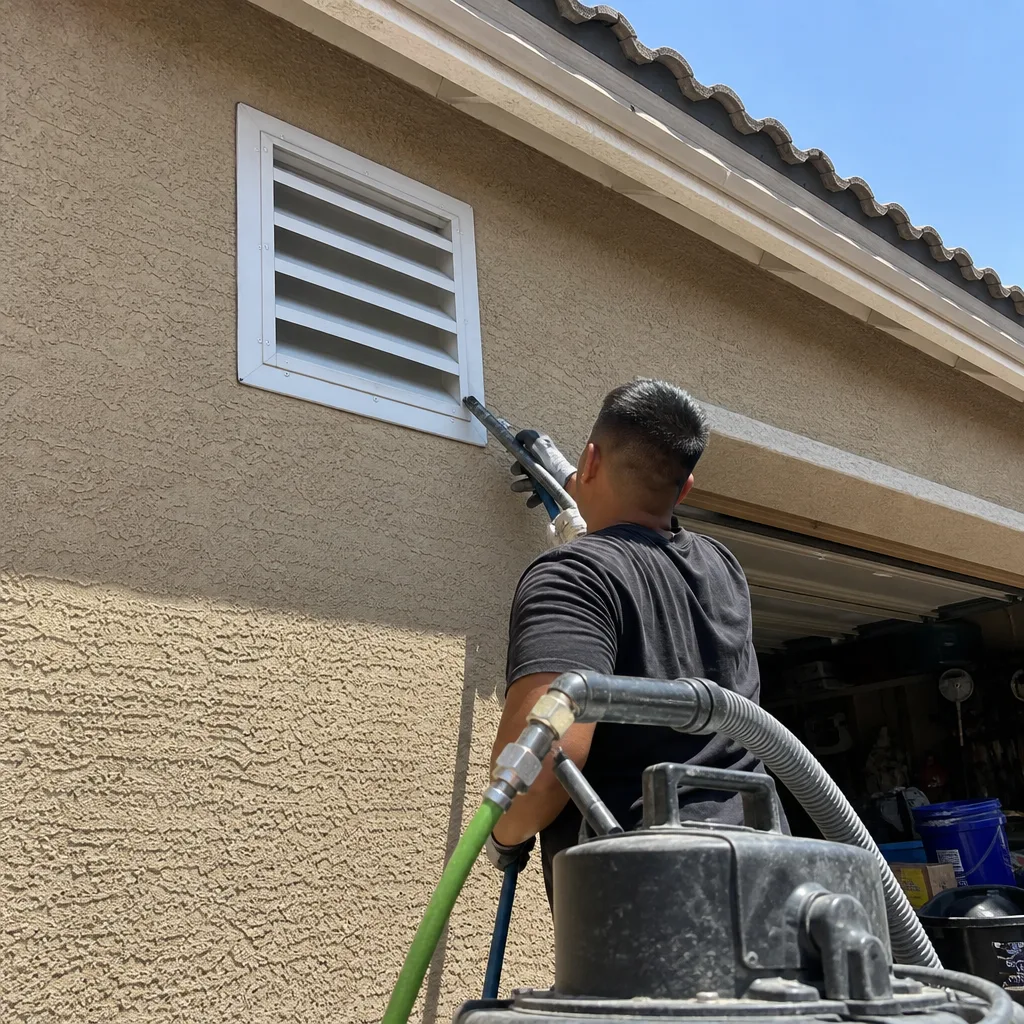
Standard fiberglass filters catch very little of this particulate. A filter upgrade (Honeywell and Aprilaire make proven media filters that fit most residential systems) helps, but it cannot remove what is already in the ducts. The only way to address existing caliche accumulation is our Air Duct Cleaning services using negative-pressure extraction: a vacuum system connected to the ducts that pulls loosened debris out of the system and into a containment unit, rather than pushing it through the registers and into the house. That is professional work. It requires a rotary brush system to agitate the dust off duct walls, a HEPA-rated vacuum to pull it out, and containment so none of it escapes into the living space. In our experience, a Las Vegas home with original 2005 ductwork will typically have a measurable caliche layer within the first few feet of the return plenum.
Post-Remodel Dust: Why Construction Debris Requires Extraction
Any remodeling project in Las Vegas generates dust. Drywall sanding, tile cutting, and flooring demolition all produce fine particulate that gets pulled into the ducts if the system runs during construction. Even if the system is off, dust settles into open register openings. The temptation is to let the regular system filter handle it. That does not work for a specific chemical reason.
Construction dust is not the same as household dust. Drywall dust is calcium sulfate dihydrate: heavy, fine, and slightly abrasive. It packs into duct corners and does not resuspend easily. Tile and grout dust is silica-based and harder than the metal surfaces it contacts. When both materials mix with the heat and low humidity of a Las Vegas attic, they bake into a cement-like layer on the interior duct walls. Brushing alone will not remove it. It requires agitation from a rotary brush system and vacuum extraction to pull the bonded material out. We have seen ducts in Las Vegas remodels where the particulate layer was thick enough to visibly reduce the interior diameter of the duct run by a third.
If you have completed a remodel or moved into a new construction home, schedule a duct inspection before the first summer. Look inside a register with a flashlight. If you see dust that is white, gray, or chalky and it coats the interior surfaces, the system needs professional cleaning. This is especially important in new construction homes, where the ductwork is installed early in the build and acts as a collection point for all the trade work that follows. The cost of a professional cleaning is a fraction of what you will pay in reduced equipment life and inflated energy costs from restricted airflow. Cardinal Air Duct Las Vegas works regularly with Las Vegas homeowners who just finished a remodel and want the system restored before the summer cooling season begins.
Airflow Symptoms You Can Feel: Weak Registers and Whistling
Airflow is the simplest thing to feel and the easiest thing to ignore. Walk through your Las Vegas home and hold your hand up to each supply register while the AC runs. You should feel a steady, firm stream of air. Compare it to the register in the room nearest the air handler. Rooms farther from the unit will naturally have slightly lower airflow, but the difference should not feel dramatic. A noticeably weak register in one room, paired with a strong register in another, indicates a duct restriction or disconnection somewhere in that branch line.
Whistling or hissing sounds at a register mean the air is moving through a restricted opening. This can be a partially closed damper, a collapsed duct section, or an undersized grille. In Las Vegas homes built during the 2000s construction boom, we frequently find takeoffs that were never properly sealed where the branch line connects to the trunk duct. Air escapes into the attic, the room never reaches temperature, and the system runs longer to compensate.
Another airflow sign: doors that pull closed or resist opening when the system runs. This indicates an imbalance between supply and return air. If the return side is undersized, the house operates under negative pressure, and air gets pulled in from anywhere it can: garage penetrations, fireplace dampers, attic hatches. That pulls outside air and dust into the home and reduces the system’s ability to condition the space. Fixing it typically means cleaning the return ductwork, sealing the return plenum, and in some cases adding a return run. The fix improves comfort, energy cost, and indoor air quality all at once.
Biological Growth: What the Mojave Climate Does and Doesn’t Cause
Las Vegas gets 4.19 inches of rain a year on average. Biological growth in ductwork is less common here than in humid climates, which makes it easy to dismiss as “not a desert problem.” That is a mistake. The Mojave environment does not eliminate biological growth. It changes where it appears. The conditions that support growth in Las Vegas homes are localized: a sweating supply plenum in a hot attic, a drain pan holding water, a humidifier set too high, a condensate line clogged during monsoon season. The inside of a duct system stays dark, and any moisture that finds its way in can support growth on the dust and debris that accumulates there.
If you smell a consistently musty odor from the registers, or if you see visible discoloration inside a duct, the answer is not to spray a disinfectant into the register. That treats the surface, not the source. Find and fix the moisture issue first, then clean the duct system. The cleaning removes the organic material that growth feeds on. The moisture fix prevents recurrence. Both sides of that equation are necessary. A professional duct cleaning company will inspect for moisture sources as part of the job, because cleaning ducts without fixing the moisture problem means the growth returns within months. For a deeper look at what professional cleaning involves, see The Complete Guide to Air Duct Cleaning in Las Vegas. In Las Vegas, the most common moisture sources we find are clogged condensate drains, uninsulated supply plenums in unconditioned attics, and bathroom exhaust fans vented into the attic instead of outside.
For homeowners dealing with persistent biological growth, we recommend filtration products from Honeywell or Aprilaire if the issue is tied to poor filtration. If the issue is moisture-related, Guardsman products are useful for addressing the ambient conditions that encourage regrowth. But the foundation of any biological growth remediation in a Las Vegas HVAC system is a thorough duct cleaning and a moisture source repair.
Common Mistakes to Avoid
- Waiting for visible dust at the registers. By the time dust is visible, the duct system is already heavily loaded. In Las Vegas, the early warning signs are utility bill changes and room temperature variance, not dust you can see. Checking energy usage and walking the house with a thermometer catches problems months earlier.
- Assuming all Las Vegas duct cleaning companies do the same job. The equipment and process vary widely. Some companies use a truck-mounted vacuum and a basic brush. Others use Rotobrush rotary brush systems with HEPA-rated extraction from Nikro and Abatement Technologies containment units. The difference determines whether loosened debris gets removed from the system or blown back into the house.
- Upgrading the HVAC unit without inspecting the ducts. A new high-efficiency unit connected to dirty, leaky, or collapsed ductwork will not deliver its rated efficiency. The ducts are part of the system. Doing one without the other wastes the investment. Duct inspection and cleaning should happen before or alongside any major HVAC replacement in Las Vegas.
- Assuming monsoon-season smells are harmless. A musty smell after summer monsoon rains is a sign of standing water somewhere in the system. Ignoring it allows biological growth to establish. Fixing the drainage issue early is a $200 repair. Ignoring it becomes a multi-service remediation job.
- Running the system during a remodel and thinking the filter will protect the ducts. Drywall dust and tile silica pass through residential filters. Once they bond inside the ductwork, only mechanical extraction removes them. If you are remodeling in Las Vegas, close off the registers in the construction zone and have the ducts cleaned after the work is complete.
- Believing that a clean filter means clean ducts. The filter only protects the equipment, and only partially. The ductwork upstream of the filter accumulates dust with every cycle. A clean filter tells you the filter was changed. It says nothing about the condition of the duct interior.
When to Call a Professional
Call a professional when your utility bill passes the 15% delta test and you cannot explain it with thermostat habits. Call when one room in your Las Vegas home consistently runs 4°F or warmer than the set point. Call when a burning smell persists past the first heating cycles of the season. Call when the white cloth test shows chalky gray residue on supply registers. Call after any remodel or new construction move-in. Call when any register feels dramatically weaker than the others. These are not scenarios that self-correct. They are mechanical and airflow issues that worsen with every system cycle. Cardinal Air Duct Las Vegas home offers free estimates in Las Vegas, and we will give you a written price before any work begins. Call (725) 600-6597 and we will walk you through what we inspect and what it costs.
Frequently Asked Questions
Most standard air duct cleanings in Las Vegas homes run $350 to $700 for a typical single-family home with one HVAC system and 10 to 16 registers. Larger homes with multiple systems, heavier caliche dust accumulation, or post-construction debris will run higher. The price should be given to you in writing before the work starts, with no changes at the door. Call (725) 600-6597 for a free estimate with an exact number for your home.
Every 3 to 5 years for most Las Vegas homes. The Mojave dust load is heavier than the national average, and homes with pets, occupants with allergies or respiratory conditions, recent remodels, or long AC seasons may need cleaning more frequently. If the white cloth test shows particulate at the supply registers, the interval is shorter.
Cheap quotes typically reflect a different process. Some companies advertise a low flat rate, then upsell heavily once the technician is inside, or they use a truck-mounted vacuum without a rotary brush and agitate dust without fully extracting it. Others skip containment and allow loosened debris to re-enter the home. A legitimate Las Vegas duct cleaning includes a brush system to agitate the dust, HEPA extraction to pull it out, and containment so it does not blow back into your living space. That costs a real price, and a company that does it properly will tell you the price up front.
Request before-and-after photos of the duct interior. Every professional-grade cleaning should include photo documentation showing the duct walls and the main trunk before and after the work. If a company refuses to provide photos, that is a red flag. This is standard practice for companies operating under The Relay Visibility Guarantee: you receive photo proof of the work before you pay the invoice.
No. Residential ductwork requires professional equipment to clean properly. The duct runs in a Las Vegas attic are long, insulated, and difficult to access. A household vacuum cannot reach the interior surfaces, and home-store cleaning products do not remove bonded caliche dust. Attempting DIY duct cleaning risks damaging the duct liner, dislodging a connection, or pushing debris further into the system. The result is a system that underperforms and a mess that is harder to fix than the original problem.
Las Vegas ductwork accumulates caliche dust, a fine calcium carbonate particulate that bonds to duct surfaces faster than ordinary household dust. The continuous AC season from May through October means the system runs more cycles and pulls in more particulate. The dry desert air bakes dust onto duct walls, making it harder to remove without mechanical agitation. Homes in Las Vegas also face seasonal issues like monsoon moisture and post-construction dust from the valley’s steady remodel pace. These factors make professional cleaning with rotary brush and HEPA extraction equipment more important here than in most markets.
Every Cardinal Air Duct Las Vegas job is backed by a full year. If the work is not done right within 365 days of service, we return and correct it at no charge. There is no fine print and no exclusion list. If the ducts were not cleaned properly, the airflow issue was not resolved, or any repair we made fails, we come back and make it right. Our related services include Dryer Vent Cleaning in Las Vegas and HVAC Cleaning in Las Vegas, and the same 365-day promise applies to every one of them.
The Bottom Line
Las Vegas homeowners cannot rely on visible dust to warn them about failing ductwork. The signals that matter are measurable: a 15% or larger month-over-month utility bill delta on a weather-normalized basis, a 4°F or larger temperature variance between rooms, a chalky gray residue on supply registers, a persistent burning or metallic smell, and weak airflow at specific registers. These indicators appear before the duct problem becomes visible at the register, and addressing them early costs far less than the energy overpayment, the equipment damage, and the eventual repair bill. The test you can run today: walk the house with a thermometer while the AC runs, wipe a white cloth across a return grille and a supply grille, and pull up your NV Energy usage history. If any of those turn up something unusual, call (725) 600-6597 and get a free estimate with a written price before any work starts. For more guides & resources, visit our blog.rts.
Written by Omar Haddad, Owner at Cardinal Air Duct Las Vegas, serving Las Vegas since 2005.
See the difference
 Before
 After
After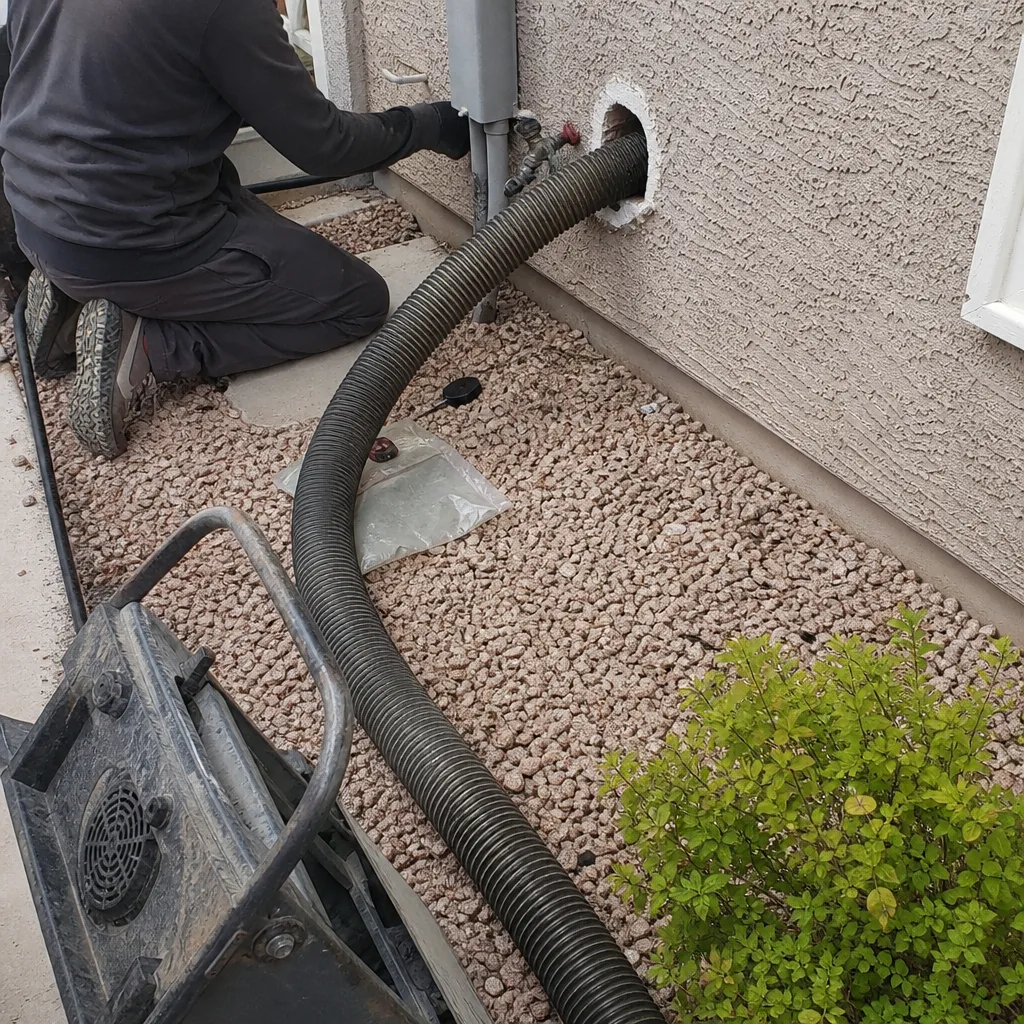 Before
 After
After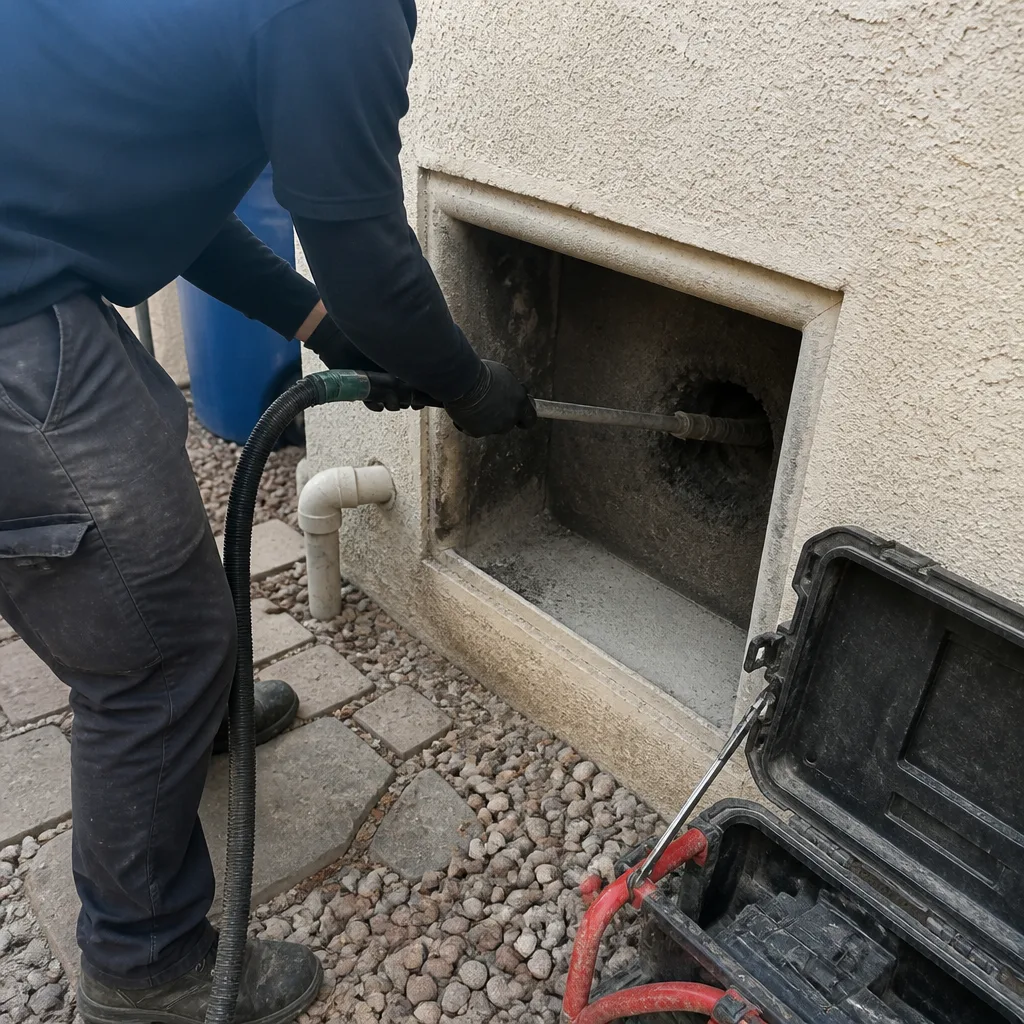 Before
 After
After